Being in an 18-wheeler's blind spot at the moment of a crash does not automatically end your legal claim. It is the first thing the carrier's defense team will tell you, and it works precisely because most people believe it.
What the no-zone argument obscures is that truck drivers carry independent obligations to check mirrors, signal before lane changes, and confirm clearance before moving. Those obligations exist regardless of where your vehicle was positioned. That distinction plays out under Texas law and is what separates a fairly resolved case from one that settles for far less than it should.
Key Takeaways:
- Being in a truck's blind spot (no-zone) at the moment of a crash does not automatically make you at fault under Texas law.
- Truck drivers have independent duties to check mirrors, signal, and confirm the lane is clear before changing lanes, regardless of where your vehicle was.
- Carriers use the no-zone argument through Texas comparative fault to reduce, not eliminate, their liability, and a fault percentage directly cuts your recovery.
- A carrier's inadequate driver training can create direct negligence liability separate from the driver's conduct.
- Black box data and truck camera footage can be overwritten within about 30 days, so preserving that evidence early is critical.
What Are the No-Zones on a Commercial Semi-Truck?
No-zones are the specific blind spot areas around an 18-wheeler where the driver cannot see surrounding vehicles through mirrors alone. They are a documented engineering reality that carriers are specifically trained and regulated to manage, not a legal shield against liability.
The FMCSA identifies four distinct no-zones on a standard commercial semi-truck: directly behind the trailer, directly in front of the cab, and along each side of the vehicle extending from the cab toward the rear.
How Large Are the Four Blind Spots on an 18-Wheeler?
The rear no-zone extends approximately 30 feet behind the trailer. The front no-zone extends approximately 20 feet ahead of the cab. The right-side no-zone extends the full length of the trailer and outward approximately two lanes. The left-side no-zone extends the trailer's length and approximately one lane outward.
A passenger vehicle can be completely invisible to the truck driver while positioned in an adjacent lane, following at a legal distance, or executing a lawful lane change. That reality does not assign automatic fault to the passenger vehicle driver.
Which No-Zone Produces the Most Severe Crash Outcomes on Texas Interstates?
The right-side no-zone produces the most severe outcomes in practice. It is the largest blind spot, extends across two full lanes, and right-side lane changes by commercial drivers are the most common mechanical trigger for no-zone collisions on Texas interstate highways.
NHTSA research on large truck crashes documents that lane change and merge events account for a significant share of commercial vehicle crashes involving passenger vehicles. On Houston's I-610, I-10, and I-45, right-side no-zone exposure is not always an avoidable choice.
Merge lane compression and interchange geometry create conditions where passenger vehicles occupy the right no-zone as a direct result of the road's physical design, not driver inattention.
Why No-Zone Crashes Are Legally More Complex Than They Appear
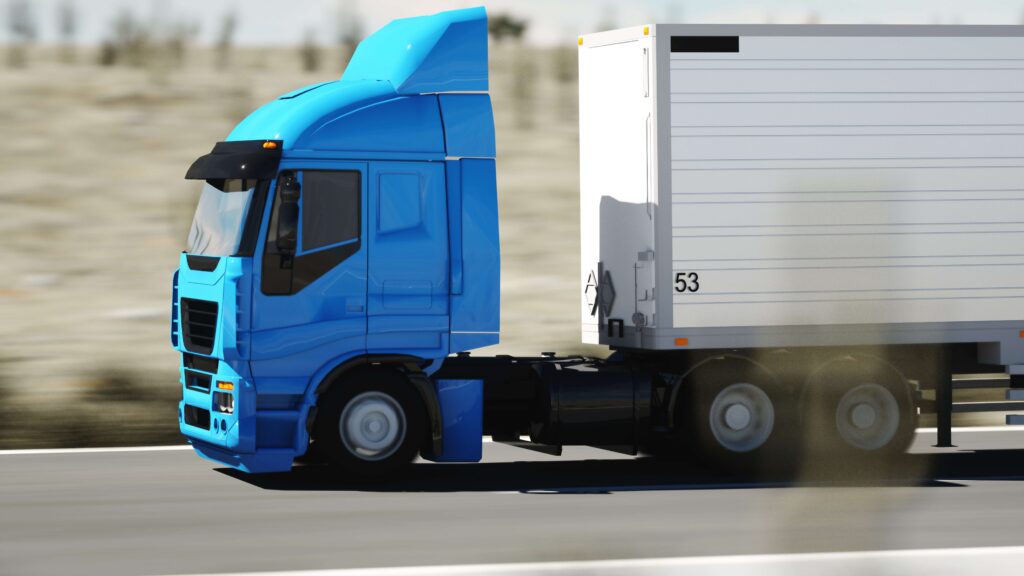
The instinctive reaction to a no-zone crash is to assign fault to the passenger vehicle driver for being where they should not have been. Texas law does not support that analysis in most cases, and carriers know it.
What carriers do instead is deploy the no-zone argument through Texas's comparative fault system to reduce rather than eliminate their liability exposure.
How Do Insurance Carriers Use Comparative Fault Against Blind Spot Victims in Texas?
Texas comparative fault rules under Tex. Civ. Prac. & Rem. Code § 33.001 allow a defendant to reduce its liability by the percentage of fault assigned to the plaintiff. Recovery is barred only when the plaintiff reaches 51% or greater fault.
In a no-zone crash, the carrier's adjuster assigns as much fault as possible to the injured person for occupying the blind spot. A 30% fault assignment on a $500,000 claim reduces the recovery by $150,000.
That tactic is most effective when the injured person does not understand that the truck driver's independent duties create liability that exists entirely outside the no-zone question. The carrier's obligation to train drivers to manage blind spots safely does not disappear because a passenger vehicle was positioned in one.
When Does a No-Zone Crash Become a Carrier Training Failure Case?
An 18-wheeler blind spot crash liability argument grounded in carrier training failure is a direct negligence claim against the carrier, not just a vicarious liability claim derived from the driver's conduct.
Federal entry-level driver training standards require instruction on mirror use, lane changes, visual search, and space management, and carriers have an independent duty to ensure their drivers are adequately trained on those practices. A carrier that failed to train its driver adequately faces direct negligence liability for the consequences.
That training failure argument draws on the carrier's own internal documentation: course records, training completion logs, and any prior incidents involving the same driver and similar lane change events. Those records are a distinct evidentiary category from the crash report.
How Houston's Interstate Network Creates Specific Blind Spot Crash Conditions
Houston's interchange geometry creates no-zone crash exposure that is not always a product of driver inattention. Certain merge sequences on Houston's major commercial corridors make blind spot occupancy unavoidable for vehicles lawfully following the road.
Which Houston Interchange Geometries Create the Highest No-Zone Crash Risk?
The I-610 West Loop between I-10 and US-59 compresses multiple lanes of through traffic and merging commercial freight into a narrowing corridor. Passenger vehicles executing lawful merges in that stretch routinely enter the right-side no-zone of adjacent commercial vehicles because the road offers no alternative path.
The I-45/I-10 spaghetti bowl interchange routes commercial freight through stacked ramp transitions where lane changes are required at highway speeds with compressed decision windows. That geometry produces right and left-side no-zone exposure for vehicles making legally required lane changes to follow their intended route.
The I-69 northeast corridor processes high commercial vehicle volume through merge zones connecting to the I-610 east loop. Passenger vehicle merge paths intersect directly with the right-side no-zones of vehicles in the adjacent freight lane at those junctions.
How Do Merging Traffic Patterns on I-10 and I-45 Produce 18-Wheeler Blind Spot Crashes?
Commercial vehicles entering I-10 from port access roads execute multi-lane merges during the same windows when passenger vehicles are exiting or changing lanes. That simultaneous movement concentrates right-side no-zone exposure at specific merge points where commercial volume and passenger vehicle density interact at once.
That pattern is not random. It is predictable from the traffic mix and geometry at those specific locations, which is precisely why a merging truck accident on I-10 in Houston requires localized accident reconstruction rather than a generic lane change analysis.
I-45 produces a similar pattern near the downtown Houston interchange. Freight traffic moving north from the port district executes lane changes across a compressing section carrying simultaneous commercial and commuter volume. TxDOT crash records reflect that Harris County consistently produces among the highest commercial vehicle crash volumes in Texas.
What to Consider After a Truck Blind Spot Crash in Texas
These considerations are framed through a legal lens rather than as scene-of-incident advice. Decisions made in the first days after a no-zone crash shape the legal record that follows.
Many claimants find it helpful to consider the following steps after a commercial truck blind spot collision:
- Document your lane position as precisely as possible in any written account of the crash. Your position relative to the truck's side and rear is a central factual question the defense will address.
- Avoid characterizing yourself as having been in the truck's blind spot in any conversation with an insurance adjuster. That characterization is the foundation of the comparative fault argument that the carrier will build against you.
- Request a copy of the crash report as soon as it becomes available and review the officer's assessment of contributing factors before speaking with any insurance carrier.
- Preserve any dashcam footage from your vehicle or vehicles in the vicinity before those recordings are overwritten.
- Contact a no-zone truck accident lawyer before providing any recorded statement, since statements made in that window become part of the permanent claim record.
Ask NMW: No-Zone Truck Crash Questions From Texas Drivers
The truck that hit me is owned by a major national carrier. Does that change anything about my claim?
Large national carriers maintain fleet safety programs, driver monitoring systems, and internal training standards that create additional evidentiary targets. Their own compliance documentation becomes a liability source when it shows the driver deviated from internal protocols. National carriers also carry substantially higher policy limits, which changes the damages calculation and negotiation dynamics considerably.
The crash happened in a construction zone on I-10 where lanes were narrowed. Does that affect my claim?
Construction zone lane narrowing can add a third defendant alongside the carrier: the construction contractor responsible for the zone's design and signage. When reduced lane widths forced vehicles into commercial truck no-zones without adequate warning, the contractor's design decisions may carry independent liability. NMW Law Firm investigates construction zone defendants as a parallel track on every applicable no-zone case.
Can I sue the trucking company even if their driver says I cut them off?
Yes. The driver's account is one piece of evidence. Black box data, dashcam footage, eyewitness accounts, and accident reconstruction analysis all produce an independent record. NMW Law Firm builds that record independently rather than accepting any single party's characterization of how the crash occurred.
How long do I have to file a truck blind spot accident claim in Texas?
The statute of limitations for personal injury claims in Texas is two years from the date of the accident under Tex. Civ. Prac. & Rem. Code § 16.003. The practical evidence window is far shorter. Black box data and carrier camera footage can be overwritten within 30 days of the crash.
What Evidence Proves 18-Wheeler Blind Spot Crash Liability in Texas?
Blind spot crash cases require evidence that goes beyond the physical crash record. The strongest no-zone liability arguments combine electronic crash data with carrier training and operational documentation that many attorneys never request.
How Do Black Box and Camera Systems Document No-Zone Crash Events?
Event data recorders in commercial vehicles capture speed, brake application, steering inputs, and turn signal activation in the seconds before impact. In a no-zone lane change crash, that data establishes whether the driver signaled before moving and how abruptly the steering input occurred.
Forward-facing and side-facing cameras are increasingly standard equipment on commercial fleets. Side camera footage can establish whether the passenger vehicle was visible before the lane change began, directly contradicting a claim that the vehicle was invisible.
Preservation demands for black box data and camera footage must be issued within the first days of a case. Both face overwrite timelines as short as 30 days.
What Carrier Records Establish Training Liability in a Blind Spot Case?
Carrier training records are the second evidentiary category that distinguishes a well-built no-zone case from one that stops at the crash report. FMCSA driver qualification standards under 49 CFR Part 391 govern who is fit to drive, and separate federal training standards address safe driving practices.
Training completion logs and course content documentation carry weight in a carrier training failure argument. A carrier that cannot produce adequate training documentation faces direct negligence exposure, regardless of the driver's conduct.
Records of prior incidents involving the same driver and similar lane change events add a pattern element that strengthens both the negligence argument and the exemplary damages analysis.
Related Content
Truck Blind Spot Accident Questions Answered by Our Texas Attorneys
What if the truck driver claims they signaled before changing lanes?
Signaling satisfies one obligation but does not fulfill the driver's duty to confirm the lane is clear before moving. A turn signal does not substitute for the affirmative obligation to verify clearance through mirrors and observation before changing lanes. Black box data showing when the signal was activated relative to the steering input is the most direct evidence against that defense.
What if there were no witnesses to the truck blind spot crash?
Witness accounts are helpful but not required to establish liability. Black box data, camera footage, physical evidence, including paint transfer and vehicle damage patterns, and accident reconstruction analysis all produce an independent liability record.
Does NMW Law Firm handle no-zone truck accident cases on a contingency fee basis?
Yes. NMW Law Firm represents no-zone and blind spot truck accident clients on a contingency fee basis. You pay nothing unless compensation is recovered on your behalf. There are no upfront legal fees and no charges if the case does not resolve in your favor.
What if the truck that hit me was not an 18-wheeler but a smaller commercial vehicle?
Smaller commercial vehicles, including box trucks, delivery vehicles, and flatbeds, carry no-zone blind spots that differ in size from a standard semi-truck but are no less legally significant. FMCSA regulations apply to most commercial motor vehicles above a defined weight threshold. Driver training and mirror-check obligations exist for all of them.
What Being in the Blind Spot Does Not Mean

Being in a no-zone at the moment of impact is not a confession of fault. It is a description of geometry that exists on every Houston interstate every day, and it is the carrier's first argument precisely because it sounds decisive when it is not.
The carrier's obligation to train drivers, maintain camera systems, and ensure mirror-check compliance before every lane change does not disappear because your vehicle happened to be where the driver could not see. NMW Law Firm's Texas truck accident lawyers build the case around those obligations, not around where your vehicle was positioned when the crash occurred.
Consultations are free, available in English and Spanish, and carry no obligation to proceed.
Call (713) 714-2563 or contact us online to get started.