Texas truck weight limits matter after a crash because excess weight can affect how a commercial truck stops, turns, and handles. An overloaded truck may need more distance to stop, place added strain on its brakes and tires, and become harder to control in an emergency.
When a truck exceeds legal weight limits, the violation may become important evidence if the overload helped cause the wreck.
Permit records, weigh tickets, cargo documents, and axle-weight data can help show how much the truck was carrying and whether the load complied with Texas and federal law.
Understanding those records can help identify whether the truck was overweight and which company may be responsible for putting an unsafe load on the road. In port cities where heavy drayage loads move every day, those records are often among the first things a Corpus Christi truck accident lawyer requests.
Key Takeaways About Texas Truck Weight Limits
- Federal and Texas law set limits on total truck weight and on weight per axle, and both types of limit matter after a crash.
- Excess weight can increase stopping demands and may contribute to rear-end and high-speed collisions.
- Permit records, weigh-station data, and cargo documents may show whether a truck was overloaded when it crashed.
- A weight-limit violation may support a negligence claim against the trucking company as well as the driver.
What are the Texas truck weight limits, and can an overweight truck lead to liability after a crash?
Texas truck weight limits generally cap commercial vehicles at 80,000 pounds gross, 20,000 pounds on a single axle, and 34,000 pounds on a tandem axle. If a truck exceeds the applicable limit without a valid permit or exception, the violation may support a negligence claim when the extra weight contributes to a crash.
Why Do Truck Weight Limits Exist in the First Place?
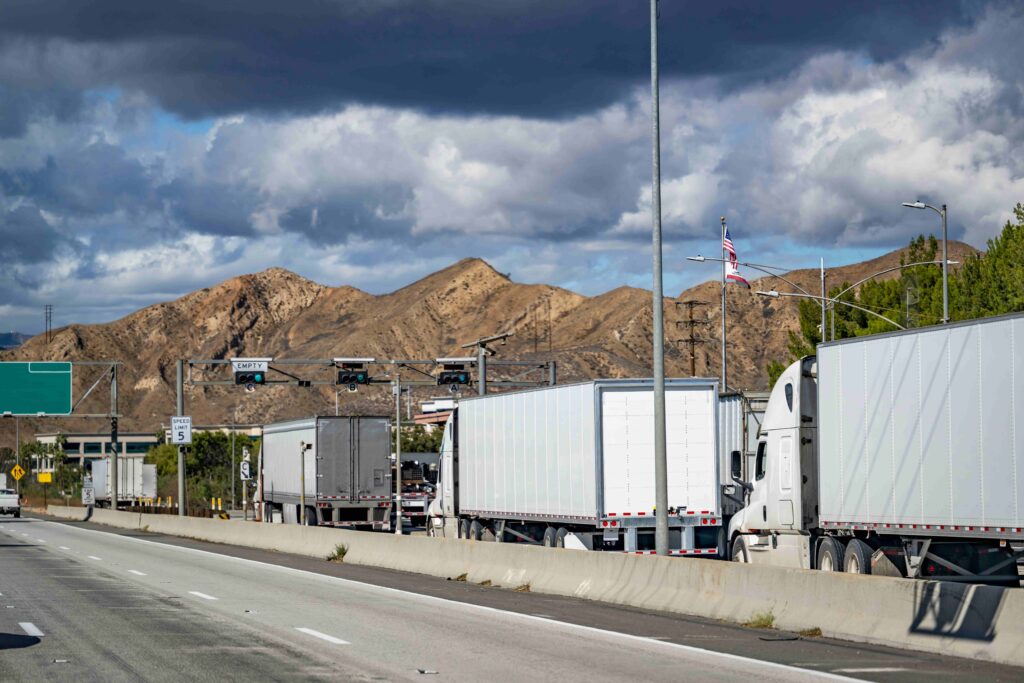
Truck weight limits exist to protect roads and bridges and to keep heavy vehicles controllable.
A loaded commercial truck already takes far longer to stop than a passenger car, and adding illegal weight makes that gap worse. The limits set a ceiling that keeps braking and steering within a safe range.
Weight affects a truck in ways that show up directly in crashes. The heavier the load, the more force the brakes have to overcome and the longer the stopping distance becomes.
- More weight means a longer stopping distance, especially at highway speed.
- Excess weight raises the risk of brake failure on long downgrades.
- An overloaded trailer is more prone to rollover in a turn or evasive move.
- Uneven overloading may cause a truck to jackknife under hard braking.
Each of these problems can make it harder for a driver to stop or control the truck in time to avoid a crash. Weight is a safety issue that plays out on the road, in the seconds when a driver tries to stop and the truck keeps moving.
The Physics a Jury Can Understand
Stopping distance makes the effect of excess weight easier to understand. A truck traveling at highway speed already needs substantial room to stop.
When a truck carries several thousand pounds over the legal limit, that added weight may increase the distance needed to slow down or stop.
In some crashes, those extra feet can help explain why overloaded trucks cannot stop before impact. Connecting the truck's weight to its braking and stopping distance can show how an overload contributed to the collision.
What Are the Truck Weight Limits in Texas?
Texas truck weight limits generally allow no more than 80,000 pounds in overall gross weight, 20,000 pounds on a single axle, and 34,000 pounds on a tandem axle.
Texas also uses the federal Bridge Formula to limit how much weight may be carried across groups of axles based on axle spacing.
Under Texas Transportation Code § 621.101, the standard limits include:
- 80,000 pounds in overall gross weight on a group of two or more consecutive axles.
- 20,000 pounds on a single axle.
- 34,000 pounds on a tandem axle.
- Additional limits under the Bridge Formula based on the number and spacing of the truck's axles.
Federal law applies the same 20,000-pound single-axle, 34,000-pound tandem-axle, and 80,000-pound overall maximums to vehicles operating on the Interstate System under 23 U.S.C. § 127.
These are standard limits, not absolute limits in every situation. Texas law allows certain overweight vehicles to operate under permits or statutory exceptions.
For that reason, determining whether a truck was illegally overweight requires comparing its actual weight with the limits, permits, and exceptions that applied to that specific trip.
The Main Types of Weight Limits
Weight limits come in a few forms, and a truck may violate one without violating another. The table below breaks down the main categories.
| Weight limit type | What it measures |
| Gross vehicle weight | The total weight of the truck, trailer, and cargo combined |
| Single-axle limit | The weight carried on one axle |
| Tandem-axle limit | The weight carried on a pair of closely spaced axles |
| Federal Bridge Formula | How weight must be spread across axles based on their spacing |
| Permitted overweight | A higher limit allowed only with a valid state permit |
A truck may stay under the gross limit and still violate an axle limit if the load sits unevenly. Reading each limit against the truck's actual weight is part of proving an overweight case.
Why Axle Weight Can Matter More Than Total Weight
Axle weight often tells the real story of an overloaded truck, even when the total weight looks legal. A load pushed too far forward or backward may leave one axle carrying far more than the law allows, while the gross weight stays within the limit.
That distribution matters because axle overloading affects braking and tire wear on specific parts of the truck.
A single overloaded axle may cause a tire failure or a brake imbalance that sends the truck out of control. An axle weight violation, on its own, may point to how a crash happened.
When Can a Truck Legally Exceed the Weight Limit in Texas?
Texas law allows some trucks to exceed standard weight limits under an overweight permit or a specific statutory exception.
The Texas Department of Motor Vehicles (TxDMV) issues these permits, which allow specific heavy or oversize loads to travel approved routes under set conditions. A truck may violate Texas law if it exceeds the standard weight limit without a required permit or legal exception.
Permits carry conditions that the carrier has to follow. A permit is not a blanket pass to haul any weight on any road.
- A permit allows a specific weight, not unlimited weight.
- A permit may restrict the route the truck may take.
- A permit may limit the days or hours of travel.
- A permit may require special markings or escort vehicles.
Breaking a permit rule may support a negligence claim if the violation helped cause the crash.
How Can an Overweight Load Affect Liability After a Crash?
An overweight load may support a negligence claim when the excess weight contributed to the crash and resulting injuries.
A violation of a safety regulation like a weight limit may serve as evidence that a trucking company failed to act reasonably, much as FMCSA rule violations often do. The injured person still has to show the violation helped cause the crash.
Overweight liability often reaches past the driver to the companies that loaded and dispatched the truck. Several parties may share responsibility depending on who created the overload.
- The trucking company that dispatched an overloaded truck
- The shipper or facility that loaded too much cargo
- The broker who arranged a load that exceeded legal limits
- The driver who knowingly hauled an illegal weight
Identifying which party caused the overload is central to an overweight truck accident liability case in Texas. The weight violation is the thread that connects the crash to a company decision, and following it is how the responsible party comes into view.
Where Overweight Loads Show Up Most in Texas
Heavy freight moves through Texas ports, border areas, and oilfield regions, where trucks often carry large or heavy loads.
Port cities like Corpus Christi and border hubs like Laredo see heavy truck traffic, which makes weight and loading records important in a port-area crash or a Laredo truck accident claim when overloading is suspected.
Oilfield haul routes carry the same risk, with equipment and materials that push weight limits on rural highways.
In these areas, weigh records, permits, and cargo documents may help show whether extra weight played a role in the crash.
Why Do Permit and Weigh Records Matter as Evidence?

Permit and weigh records matter because they may prove a truck was overloaded when it crashed.
These documents create a paper trail showing the truck's weight, its permit status, and whether it followed the conditions it was supposed to. That trail can be the strongest evidence in an overweight case.
The records that help prove weight follow different retention cycles, and some disappear quickly without a legal demand to preserve them. The most useful records in these cases include:
- The overweight permit, if the carrier held one, and its conditions
- Weigh-station and scale-ticket records showing the truck's weight
- The bill of lading and cargo documents listing the load
- Shipping and loading records from the origin facility
- The truck's maintenance records, since overloading stresses brakes and tires
Each record helps answer whether the truck exceeded the axle weight or gross limits the law allowed. Because these documents sit with the companies involved, an early preservation demand is often what keeps them available for the case.
How Can NMW Law Firm Help After an Overweight-Truck Crash?
NMW Law Firm helps people injured by overweight trucks by tracing the weight violation back to the company responsible for it. An overloaded truck usually points to decisions made above the driver, and reaching those decisions is where these cases are built.
Our approach starts with the records that reveal the load. Permit filings, weigh tickets, and cargo documents often show whether a truck exceeded Texas truck weight limits, and we work to preserve them before they disappear.
Experience With Commercial Trucking Claims
Commercial trucking cases require attention to federal and state regulations that ordinary car crash claims never touch. Our attorneys have recovered over $200 million for injured Texans, and because every case turns on its own facts, no past result promises a future one.
The team carries more than 70 years of combined experience across Texas personal injury and commercial trucking claims, and Managing Partner Nick Wills leads the practice. Most of our clients reach us through a referral from their treating doctor, which keeps the medical and legal sides of a case moving together.
FAQs for Texas Truck Weight Limits
How do I find out if the truck that hit me was overweight?
You may find out whether a truck was overweight through the permit, weigh, and cargo records a lawyer requests after a crash.
These documents show the truck's weight and permit status. Because carriers control most of them, sending a preservation demand early helps keep the records from disappearing.
Is an overweight truck automatically at fault for a crash?
No, an overweight truck is not automatically at fault, because the excess weight has to have contributed to the crash.
A weight violation may serve as strong evidence of negligence, but the injured person still has to connect the overload to how the collision happened. Fault depends on the facts of the crash.
Can the company that loaded the truck be sued for overloading it?
Yes, a company that loaded a truck beyond legal limits may share liability for a resulting crash.
Shippers and loading facilities that create an illegal overload may be responsible along with the trucking company. Identifying who loaded the truck is part of building an overweight-load case.
How long do I have to file a claim after an overweight-truck crash in Texas?
Two years from the date of the crash is the general deadline to file a truck accident claim in Texas, under Section 16.003 of the Texas Civil Practice and Remedies Code. Acting well before that deadline helps preserve the weight and permit records a case depends on.

Talk to a Lawyer About Texas Truck Weight Limits and Your Crash
An overweight truck leaves a trail, in permits, in weigh tickets, and in the loading records that show what the company put on the road. That trail is often the difference between a case that reaches the responsible company and one that stops at the driver.
The catch is that the trail fades. Records cycle out, trucks get reloaded, and the weight that caused the crash becomes harder to prove with every week that passes.
If an overweight or overloaded commercial truck injured you anywhere in Texas, NMW Law Firm can start tracing that evidence now. Call (713) 714-2563 for a free case review, and our team will look at what the records still show.