When a commercial truck driver causes a serious crash, the instinct is to focus on what the driver did wrong at the scene. Negligent hiring and retention cases ask a different question: what did the carrier know about this driver before they ever turned the key, and what did it do when warning signs emerged afterward?
Those two questions produce a different defendant, a different damages profile, and in the right case, a direct path to exemplary damages that a standard vicarious liability claim alone does not provide.
Key Takeaways
- Negligent hiring and negligent retention hold a trucking company directly liable for its own decisions, separate from what the driver did at the scene.
- Negligent hiring turns on what the carrier knew, or should have found, before putting the driver on the road; negligent retention turns on how it responded to warning signs afterward.
- Federal rules under 49 CFR Part 391 require specific background checks, and skipping or botching them can ground a direct-negligence claim.
- These claims survive the carrier's independent-contractor defense, because they rest on the carrier's own conduct, not the employment relationship.
- The driver qualification file, PSP report, and Drug and Alcohol Clearinghouse records show what the carrier knew, and they are destroyed on retention schedules, so preserve them early.
Why Negligent Hiring and Retention Are Distinct Legal Theories That Require Separate Evidence
What Is Negligent Hiring in a Texas Commercial Trucking Case?
Negligent hiring holds a carrier directly liable for placing an unqualified or dangerous driver behind the wheel. The theory attaches at the point of the hiring decision, regardless of what the driver subsequently did on the road.
The carrier's obligation before hiring a commercial driver includes a background investigation covering prior employment history, driving record, drug and alcohol testing, and commercial driver's license verification. Those obligations are not voluntary best practices. They are federal requirements under 49 CFR Part 391, which governs driver qualification standards for all commercial carriers operating in interstate commerce.
A carrier that skipped required background checks, ignored disqualifying information those checks revealed, or hired a driver who did not meet federal qualification standards faces direct liability for the foreseeable consequences.
What Is Negligent Retention in a Texas Commercial Trucking Case?
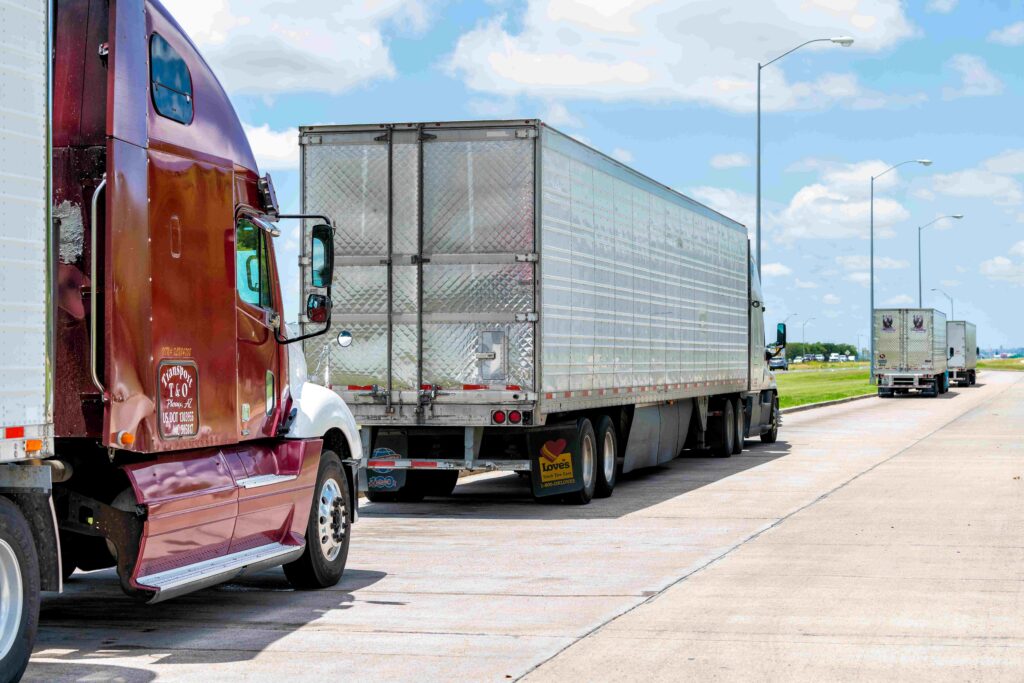
Negligent retention holds a carrier liable for keeping a driver on the road after warning signs emerged that should have triggered disqualification, retraining, or termination. The theory attaches after the hiring decision, when the carrier had access to information that a reasonable carrier would have acted on.
Warning signs triggering a retention obligation include subsequent moving violations, prior crash involvement, failed or missed drug tests, complaints from dispatchers or other drivers, and patterns of HOS violations reflected in ELD records.
A carrier that received those warnings through its own monitoring systems and chose not to act on them assumed the foreseeable risk of a subsequent crash. That failure to act is the actionable conduct in a negligent retention case, and it draws on the carrier's post-hiring records rather than the pre-employment file.
What Federal Regulations Define the Carrier's Hiring Obligations?
What Must a Carrier Investigate Before Hiring a Commercial Driver?
49 CFR Part 391 Subpart B requires carriers to obtain the following before a driver operates a commercial vehicle in interstate commerce:
- A completed application for employment covering the prior ten years of employment history
- Motor vehicle record inquiries from every state where the driver held a license in the prior three years
- A safety performance history inquiry to every employer for whom the driver operated a commercial vehicle in the prior three years
- A pre-employment drug test with a verified negative result
- A current medical examiner's certificate confirming the driver meets physical qualification standards
Each requirement exists because each category of information has a documented relationship to crash risk. A carrier that omitted any of these steps at hiring faces a negligent hiring argument grounded in specific regulatory non-compliance, not just general negligence principles.
What Is a PSP Report and Why Does It Define the Negligent Hiring Analysis?
The FMCSA's Pre-Employment Screening Program, or PSP, provides carriers with a commercial driver's five-year crash history and three-year roadside inspection history before the hiring decision is made. Carriers are not legally required to obtain a PSP report, but the PSP exists precisely because the information it contains is directly relevant to driver fitness.
A carrier that did not obtain a PSP report before hiring a driver with a documented crash history cannot credibly argue it was unaware of that history. The tool existed to provide exactly that information, and the carrier's choice not to use it goes to the adequacy of the background check.
How Do Negligent Hiring and Retention Claims Differ From Standard Vicarious Liability in Texas?
A vicarious liability claim against a carrier holds the carrier responsible for the driver's conduct at the scene through the employer-employee relationship. Negligent hiring and retention claims hold the carrier accountable for its own decisions, independent of the driver's conduct at the scene. Identifying the parties responsible for a crash often requires looking past the driver entirely.
That distinction matters most when the carrier argues the driver was an independent contractor. Negligent hiring and retention claims survive that argument because they do not depend on an employment relationship. They depend on the carrier's own conduct in selecting and monitoring the driver.
When the evidence supports exemplary damages, the carrier's direct negligence also provides a stronger foundation than vicarious liability alone. Under Tex. Civ. Prac. & Rem. Code § 41.003, exemplary damages require proof of gross negligence. A carrier that hired a driver with a disqualifying crash history after reviewing a PSP report that revealed it presents a stronger gross negligence argument than one where the driver's crash was an isolated event.
How Does the Independent Contractor Defense Affect Negligent Hiring Claims in Texas?
Carriers increasingly use independent contractor arrangements to limit vicarious liability exposure. When a driver is classified as a contractor rather than an employee, the carrier argues that vicarious liability does not attach because no employer-employee relationship existed. Understanding how trucking companies dodge liability through classification is often the first step in evaluating the claim.
Texas courts examine the actual working relationship rather than the contractual label. A carrier that controls the driver's schedule, assigns loads, and monitors performance through its own systems may be found to have created an employment relationship regardless of the contract's language.
Negligent hiring and retention claims provide a direct path around the contractor defense entirely. The carrier's obligation to vet drivers it deploys on its freight extends to contractor arrangements when the carrier exercises meaningful control over who operates in its name.
How Does Texas's Cross-Border Driver Market Create Specific Negligent Hiring Exposure?

Texas's cross-border commercial freight market creates a negligent hiring context with no equivalent in most other states. Carriers operating on the I-35 Laredo corridor and through other Texas border crossings frequently deploy drivers holding commercial licenses issued in Mexico operating under cross-border driving authority.
Federal verification obligations for cross-border drivers require additional steps beyond the standard domestic background check. A carrier that applied domestic-only verification procedures to a cross-border driver failed to verify the driver's foreign license history and prior employment record under Mexican carrier regulations.
That verification gap becomes a negligent hiring argument when the driver's prior record, had it been properly investigated, would have revealed disqualifying conduct.
What to Consider After a Crash Involving a Potentially Unqualified Truck Driver
Many claimants find it helpful to consider the following after a serious commercial truck crash:
- Obtain the driver's full name, commercial driver's license number, and the carrier's DOT number from the crash report as soon as it becomes available. Those identifiers are required to request the driver's PSP report and the carrier's safety record.
- Note any indicators at the scene suggesting driver impairment, fatigue, or behavioral irregularity. Those observations may correspond to prior patterns reflected in the driver's employment history.
- Request the carrier's FMCSA Safety Measurement System record promptly. That record establishes the carrier's inspection and violation history and may reflect prior citations involving the same driver.
- Avoid accepting the carrier's characterization of the crash as an isolated driver error before the driver's qualification file and prior employment history have been independently reviewed.
- Contact a trucking company liability bad driver attorney before the carrier's driver qualification file reaches the end of its federal retention period, which is three years from the date of employment termination under 49 CFR Part 391.
Ask NMW: Negligent Hiring and Retention Questions From Texas Truck Crash Victims
The carrier says the driver passed all required pre-employment checks. Does that end the negligent hiring argument?
Not necessarily. The issue is not only whether the required checks were completed but whether they were done adequately. A motor vehicle record inquiry covering one state when the driver held licenses in several is incomplete, and a safety-history inquiry not sent to every prior employer in the lookback period is deficient. Completing the form does not establish the adequacy of the investigation.
The carrier's insurer is trying to resolve the claim quickly before we have the driver's background file. Should I accept?
No. Early settlement offers in negligent hiring cases are made before the driver qualification file, PSP report, and Clearinghouse query records have been independently reviewed. Accepting a settlement before that review closes the claim permanently, regardless of what those records subsequently show. Contact an attorney before responding to any settlement offer in a case where the driver's background may be relevant.
Does the driver's criminal history factor into a negligent hiring claim in Texas?
Criminal history is relevant when it reflects conduct tied to commercial driving safety, such as prior DWI convictions, reckless driving charges, or incidents involving impaired operation. The federal driver-qualification framework does not list criminal history as a required inquiry, but Texas negligence law does not limit the negligent hiring analysis to federally required checks alone.
What Evidence Builds a Negligent Hiring or Retention Case Against a Texas Trucking Company?
Which Records Define the Driver Qualification File in Texas Trucking Cases?
The FMCSA driver qualification file requirements under 49 CFR Part 391.51 establish what every carrier must maintain for each driver it employs. Those records include:
- The driver's employment application covering ten years of prior employment history
- Motor vehicle record inquiries from every applicable state
- Safety performance history inquiries from every prior employer within the three-year lookback period
- Pre-employment drug test results and subsequent random testing records
- Medical examiner certificates and any correspondence regarding physical qualification
- Annual motor vehicle record review results conducted during employment
- Any driver violation reports and the carrier's documented response to them
A preservation demand must be issued before those retention periods expire to prevent lawful document destruction.
How Does the FMCSA's Drug and Alcohol Clearinghouse Affect Negligent Hiring Evidence?
The FMCSA Drug and Alcohol Clearinghouse is a federal database that records commercial driver drug and alcohol violations. Carriers are required to query the Clearinghouse before hiring a commercial driver and annually during employment.
A carrier that failed to conduct a required Clearinghouse query before hiring a driver with a prior drug violation faces direct negligent hiring exposure based on that specific regulatory failure. A carrier that conducted the required annual query, found a violation, and did not remove the driver from service faces a negligent retention claim based on its response to that finding.
Both scenarios produce carrier liability through different evidentiary paths, both of which require the Clearinghouse query records to be preserved alongside the driver qualification file.
Related Content
Negligent Hiring Trucking Company Texas: Questions Answered by Our Attorneys
What if the carrier used a third-party background check service that missed the driver's prior record?
Delegating the pre-employment investigation to a third-party service does not discharge the carrier's obligation to conduct an adequate one. When that service investigates inadequately and the carrier relies on the result without verification, the carrier's reliance on a deficient check is itself the negligent conduct. The service may also carry independent liability, adding another defendant.
Can a negligent hiring claim be filed against a carrier that is based outside Texas?
Yes. Out-of-state carriers whose driver hiring practices contributed to a crash on Texas roads are subject to Texas court jurisdiction for that crash. The carrier's state of domicile does not determine where the claim is filed. Texas courts exercise jurisdiction over any defendant whose conduct produced injury on Texas roads, regardless of where the hiring decision was made or where the carrier maintains its principal place of business.
Does NMW Law Firm handle negligent hiring trucking company cases in Texas on a contingency fee basis?
Yes. Negligent hiring investigations require pulling driver qualification files, PSP reports, Clearinghouse records, and in cross-border cases, foreign license verification. That scope does not change the fee structure. We handle every step at no upfront cost and collect fees only when compensation is recovered. If the case does not resolve in your favor, there are no charges.
What the Carrier Knew Before the Crash Is the Question That Changes Everything

The driver qualification file, the PSP report, and the Clearinghouse query records define what the carrier knew before this crash happened. Those documents existed before the driver turned the key. They establish whether this was a foreseeable outcome of a carrier's own hiring decision.
That question is worth asking before any settlement is accepted. The Houston truck accident lawyers at NMW Law Firm review the carrier's hiring and retention records in every commercial trucking case. Consultations are free, available in English and Spanish, and carry no obligation to proceed.
Call (713) 714-2563 or contact us online to get started.