A Texas truck accident case is worth the amount supported by its facts and evidence. Online settlement averages are rarely useful because they combine minor injury claims with cases involving permanent disability or death.
Case value usually depends on the severity of the injuries, whether they are permanent, the amount of lost income, reduced future earning ability, available insurance coverage, and the strength of the fault evidence.
Violations of Federal Motor Carrier Safety Administration rules may also increase the value of a claim.
Texas law can reduce compensation if the injured person is partly at fault. The insurer will review each of these factors before making a settlement offer.
What factors affect a truck accident settlement in Texas?
Truck accident settlement value in Texas depends on injury severity, available insurance coverage, the strength of the negligence evidence, and whether the carrier violated federal safety regulations. There is no reliable average because each case involves a unique combination of these factors.
Key Takeaways About Truck Accident Settlement Value in Texas
- No reliable source can provide a meaningful average truck accident settlement because each case depends on its own facts, including injury severity, available coverage, liability evidence, and regulatory issues.
- Texas truck accident claims often involve multiple insurance policies and multiple liable parties, which means the total available coverage may be significantly higher than in a standard car accident.
- Comparative fault under Texas law reduces your recovery by your percentage of responsibility and eliminates it entirely if your fault exceeds 50%.
- FMCSA violations by the driver or carrier, such as hours-of-service infractions or maintenance failures, often increase settlement leverage by strengthening the negligence evidence.
- The first settlement offer from a trucking company's insurer is typically calculated to close the claim before you know its full value.
Why Nobody Gives You a Straight Answer on Truck Accident Settlements
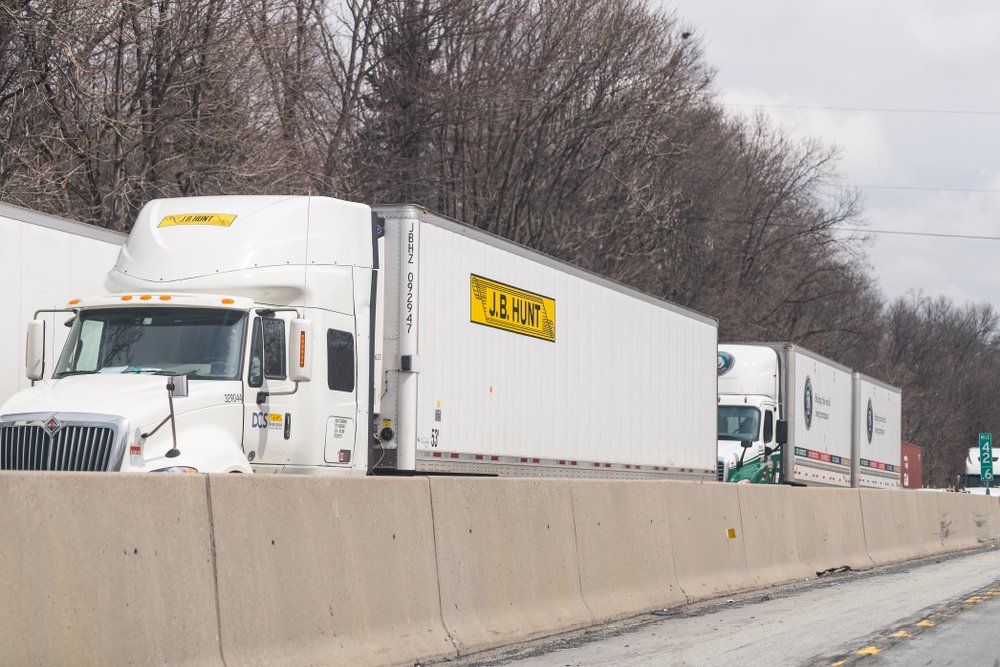
Published average truck accident settlement figures in Texas are misleading because they blend catastrophic injury cases with minor-impact claims into a single number that applies to almost no one.
The Math Behind the Misleading Ranges
A truck accident causing a herniated disc produces a fundamentally different claim than one causing a traumatic brain injury or paraplegia.
The medical costs, lost earning capacity, and pain calculations differ by orders of magnitude. Averaging those outcomes together creates a figure that describes none of them accurately.
Coverage limits add another layer. The Federal Motor Carrier Safety Administration (FMCSA) requires interstate carriers to maintain at least $750,000 in liability coverage under 49 CFR §387.9.
Many large carriers on Houston's I-10 and I-45 freight corridors carry $1 million or more. A claim against a well-insured carrier with multiple safety violations looks nothing like a claim against a thinly covered independent operator.
What a Valuation Actually Looks At
Instead of averages, a truck accident attorney evaluates four categories: damages, liability strength, available coverage, and litigation risk. The interaction between all four produces a realistic settlement range. Remove any one factor and the picture changes.
What Drives the Dollar Figure Up or Down?
Truck accident compensation factors in Texas include injury permanence, total economic losses, non-economic harm, liable party count, available insurance, and the regulatory evidence against the carrier. The following table maps each factor to its effect on value.
| Factor | Effect on Claim Value | What Makes It Stronger |
| Injury severity and permanence | More severe and lasting injuries produce higher damages | Surgical records, long-term treatment plans, specialist testimony |
| Medical expenses (past and future) | Form the economic baseline of the claim | Complete records, life care plans, projected treatment costs |
| Lost income and earning capacity | Increase economic damages, especially for long-term impairment | Employment records, vocational analysis, tax documentation |
| Pain and suffering | Add non-economic value on top of financial losses | Consistent treatment, personal testimony, counseling records |
| Carrier regulatory violations | Shift negotiation leverage toward the plaintiff | Hours-of-service infractions, maintenance gaps, CDL violations |
| Coverage and asset pool | Set the ceiling on realistic recovery | Multiple defendants, excess policies, carrier financial review |
| Your share of fault | Reduces recovery dollar-for-dollar under Texas law | Accident reconstruction, witness testimony, electronic data |
Why Federal Safety Violations Move the Needle
FMCSA violations by the truck driver or carrier push settlement leverage higher because they make the defense case harder to sell.
A carrier that violated hours-of-service rules under 49 CFR Part 395 or skipped brake inspections required under 49 CFR Part 393 faces a tougher negotiation.
Those violations do not guarantee a higher number. But they shift the risk calculation for the carrier's insurer.
In Harris County, where trucking cases go to trial with some regularity, the prospect of a jury seeing regulatory noncompliance carries real weight at the settlement table.
How Fault Allocation Shrinks a Truck Accident Claim
Texas comparative fault law under Texas Civil Practice and Remedies Code §33.001 reduces your truck accident recovery by your percentage of responsibility. If your share exceeds 50%, your claim is barred entirely.
The Defense Playbook on Fault
Trucking defense teams raise comparative fault in nearly every case. The specific arguments vary, but certain claims appear over and over again in Texas truck accident litigation:
- The plaintiff followed too closely or sat in the truck's blind spot
- The plaintiff changed lanes abruptly or made an unpredictable maneuver
- The plaintiff was speeding, distracted, or slow to brake
- The plaintiff's vehicle had a maintenance issue like worn tires or dim taillights
Defense teams do not need to eliminate your case to save their client serious money. They just need to move the percentage enough to compress the settlement range.
Medical History and Treatment Gaps
Carriers also mine your medical records. A pre-existing condition at the same injury site or a gap in your treatment timeline gives the defense material to argue the crash did not cause all of your harm. Consistent documentation from your providers limits how far that argument reaches.
What the Carrier's Insurer Is Actually Doing With Your Claim
The carrier's insurer begins building a valuation almost immediately after the crash, and that valuation is designed to close the file at the lowest defensible figure.
Insurers suppress early offers through a predictable set of strategies:
- Offering a fast number before you reach maximum medical improvement (MMI), the point where your doctor says your condition has stabilized
- Counting only current medical bills and ignoring future treatment, rehabilitation, or lost earning capacity
- Applying an inflated comparative fault estimate to discount the offer before negotiations start
- Challenging the causal link between the crash and specific injuries, especially soft tissue or psychological harm
- Requesting blanket medical authorizations to search your full health history for pre-existing conditions
A number that arrives before you know the full scope of your injuries almost certainly undervalues the claim. The spread between the early offer and the claim's actual worth tends to grow wider as injury severity increases.
How Multiple Defendants Change the Equation
Truck accident claims in Texas frequently involve more than one liable party, and each additional defendant may expand the total coverage pool.
A commercial trucking crash may involve the driver, the motor carrier, a brake shop that serviced the rig, a cargo loader that improperly secured freight, or a parts manufacturer.
More Parties, More Policies
Each liable party carries its own insurance or assets. A claim against the driver alone might tap only the carrier's primary policy. Adding a negligent maintenance contractor or a third-party cargo company may open entirely separate coverage.
Texas permits proportionate liability under Texas Civil Practice and Remedies Code §33.013, meaning each defendant pays damages corresponding to their share of fault.
Identifying every responsible party early expands both the available compensation and the leverage your attorney carries into negotiations.
In multi-defendant trucking cases, the value of the claim often increases simply because the defense has more exposure to manage.
Related Content
FAQs for Truck Accident Settlement Values in Texas
How long does a Texas truck accident case take to settle?
Truck accident settlements in Texas vary widely. Straightforward cases with clear liability may resolve within months after maximum medical improvement.
Multi-defendant cases or those involving catastrophic injuries frequently take a year or longer, especially if the case moves into litigation and discovery in Harris County district court.
Do most Texas truck accident cases go to trial?
Most truck accident cases in Texas settle before a jury hears them. Carriers prefer to avoid unpredictable verdicts, particularly in plaintiff-friendly jurisdictions like Harris County.
But the credibility of your willingness to go to trial directly shapes how seriously the insurer treats the negotiation. A case prepared for trial settles differently than one prepared only for mediation.
What is the minimum liability insurance a Texas trucking company must carry?
FMCSA requires interstate carriers transporting general freight to maintain at least $750,000 in liability coverage, with higher minimums for hazardous materials.
Many carriers on Houston's freight corridors carry policies well above the federal floor. The amount of available coverage sets the practical ceiling on what a settlement may realistically produce.
Does a fatal truck accident produce a different type of claim?
Yes, a fatal truck accident may give rise to two related Texas claims. A wrongful-death claim compensates eligible surviving spouses, children, and parents for their own losses resulting from the death.
A survival claim preserves certain personal-injury damages the deceased person could have pursued had they survived. The available damages and proper claimant depend on the facts, including who incurred funeral and burial expenses.
What if the carrier offers to pay my medical bills directly?
Direct payment of medical bills by the carrier is a settlement tactic, not a goodwill gesture. These payments frequently come with conditions or releases that limit your ability to pursue the full value of your claim.
Have an attorney review any direct payment proposal before you accept anything from the carrier or its insurer.
Get a Grounded Assessment of What Your Truck Accident Claim May Support

Your claim’s value depends on the facts of your case, including your medical records, lost income, the motor carrier’s regulatory history, available insurance coverage, and all potentially responsible parties.
At NMW Law Firm, we evaluate trucking claims based on documented evidence—not online estimates or guesswork. As treatment progresses and new evidence emerges, we reassess the claim to account for the full impact of your injuries.
With more than $200 million recovered, over 3,000 cases resolved, and more than 70 years of combined legal experience, our firm has the background to evaluate complex truck accident claims and pursue the compensation supported by the evidence.
More than 90% of our clients are referred by physicians, reflecting our experience handling cases involving serious injuries, extensive medical treatment, and disputed causation.
Call (713) 714-2563 to discuss the factors that may affect your case and receive a straightforward assessment.