Federal truck underride guard standards set the minimum strength requirements for the metal bar mounted at the rear of most tractor-trailers. That bar is designed to stop a following vehicle from sliding beneath the trailer frame during a rear-end collision.
When the guard fails, bends, or detaches on impact, the trailing car passes under the trailer at windshield height. The roof shears off. The occupants face injuries that airbags and crumple zones were never designed to address.
The National Highway Traffic Safety Administration (NHTSA) has updated the rear guard standard over time, most recently through a 2022 final rule strengthening FMVSS 223.
Yet safety researchers and advocacy groups continue to argue that the current force thresholds remain below what many real-world highway collisions produce. No federal standard addresses side underride protection at all.
Houston's freight corridors along I-10, I-45, and I-69 carry heavy commercial truck traffic daily. Stop-and-go conditions on the Katy Freeway and 610 Loop create closing-speed scenarios where guard integrity may determine whether occupants survive.
What are the federal requirements for truck underride guards, and who may be held liable when an underride guard fails in a crash?
Federal law requires many trailers and semitrailers to have rear underride guards that meet FMVSS 223 and 224. NHTSA strengthened those standards in 2022, but compliant guards may still fail in some high-speed, offset, or unusually severe crashes. Federal law does not currently require side underride guards. When a guard fails, liability may extend beyond the truck driver to the motor carrier, trailer manufacturer, guard manufacturer, or maintenance provider.
Key Takeaways About Truck Underride Guard Standards
- Federal Motor Vehicle Safety Standard (FMVSS) 223 sets strength and energy absorption requirements for rear underride guards on trailers, with the most recent amendments finalized in 2022.
- A rear guard that meets the current federal standard may still fail in certain real-world crashes if the collision forces exceed the standard's test parameters.
- No federal regulation currently requires side underride guards on tractor-trailers, despite research showing they reduce fatal side-impact underride risks.
- Product-liability claims generally are subject to Texas’s two-year limitations period, but they may also be barred by Texas’s 15-year statute of repose, subject to statutory exceptions.
- Texas product liability law allows claims based on design defect, manufacturing defect, or failure to warn, each of which may apply in an underride guard failure case.
What Federal Standards Govern Rear Underride Guards?
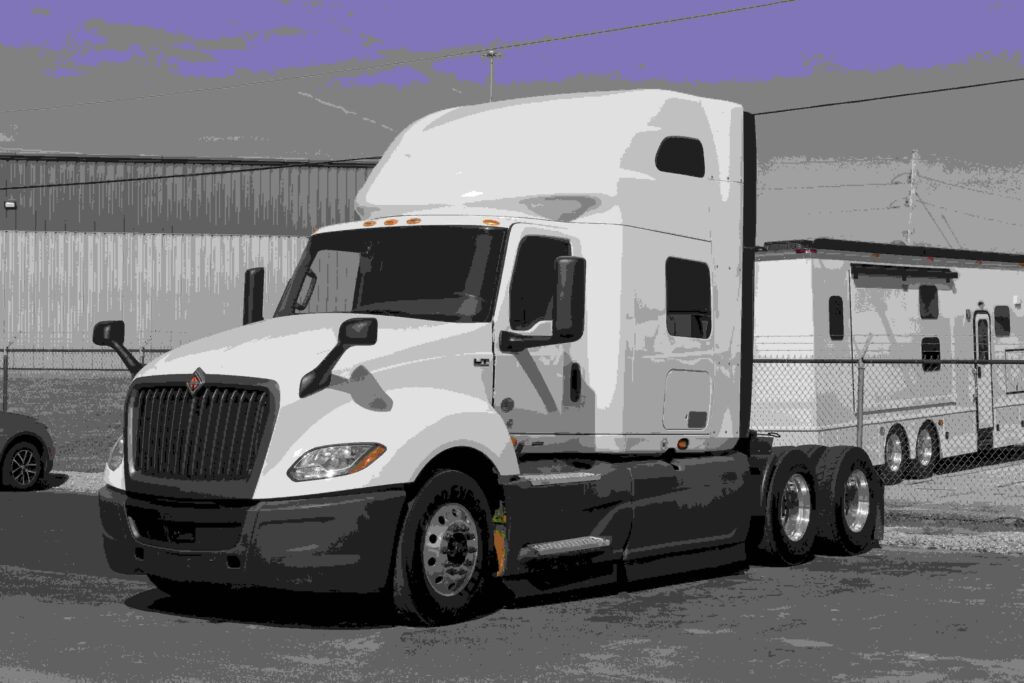
FMVSS 223 sets the strength and energy absorption requirements for rear impact guards on trailers and semi-trailers with a gross vehicle weight rating above 10,000 pounds. FMVSS 224 requires that most new trailers meeting certain criteria actually install a compliant guard.
How FMVSS 223 Tests Guard Strength
The standard subjects the guard to controlled force application at three points: two near the outer edges and one at the center. The guard must resist specified force levels at each point without deflecting beyond set limits.
These are laboratory procedures measuring strength and energy absorption under controlled conditions, not full-scale crash simulations.
The test parameters set the regulatory floor for guard performance. Whether a guard that passes these controlled tests performs adequately in a highway collision at higher speeds, offset angles, or with heavier vehicles is a separate engineering question that product liability litigation frequently examines.
Trailers Exempt from FMVSS 224
Not every commercial vehicle on Texas highways must carry a rear underride guard under FMVSS 224. Several exemptions appear frequently in Houston freight traffic:
- Wheels-back trailers where the rear axle sits at or near the very back of the trailer
- Low-chassis trailers and platform trailers with a rear loading surface below a specified height
- Pole trailers used to transport long items like logs, pipes, or structural steel
- Trailers manufactured before the current standard's applicability date
A trailer in one of these exempt categories may have no rear guard or a voluntarily installed guard that does not meet FMVSS 223. In an underride crash involving an exempt trailer, the liability analysis shifts toward the carrier's decision to operate that vehicle without adequate rear protection.
Why Do Rear Underride Guards Fail in Real Crashes?
A rear underride guard failure occurs when the guard bends, breaks, or detaches during a collision, allowing the trailing vehicle to pass beneath the trailer.
Guards meeting the current FMVSS 223 standard may still fail when real-world impact forces exceed the standard's test parameters.
Common Guard Failure Modes
FMVSS 223 applies force sequentially at three points under controlled conditions. Real crashes rarely distribute force so neatly.
An impact at the center of the guard at a high closing speed may produce forces beyond the standard's thresholds. Offset impacts may cause the guard to twist or pull free from its brackets.
Specific failure modes that appear repeatedly in underride crash analysis include:
- Guard mounting brackets shearing from the trailer frame under forces exceeding FMVSS 223 levels
- Welded joints at the guard-to-bracket connection failing under offset impacts
- Lightweight guard materials bending or collapsing rather than absorbing impact energy
- Guards manufactured with substandard steel or inconsistent weld quality
- Aftermarket or replacement guards installed without meeting FMVSS 223 certification
Each failure mode points to a different potentially liable party: the guard manufacturer, the trailer builder, the carrier, or a maintenance provider who installed a non-compliant replacement.
Does Federal Law Require Side Underride Protection on Trucks?
No federal regulation currently requires side underride guards on tractor-trailers in the United States. Side underride crashes, where a passenger vehicle strikes the trailer's side and passes beneath it, account for a significant portion of fatal underride incidents.
Where Side Guard Policy Stands
The European Union has required lateral protection devices on heavy trucks and trailers for decades under EU Directive 89/297/EEC. These devices mount along the trailer's lower sides between axles and prevent vehicles and cyclists from sliding beneath during a side impact.
U.S. legislative proposals to mandate side guards have been introduced multiple times but have not become law. NHTSA has studied the issue and acknowledged the effectiveness of side guards in certain scenarios without issuing a federal mandate.
Liability Without a Federal Side Guard Requirement
The absence of a federal standard does not eliminate liability. A design defect claim against the trailer manufacturer may argue that the trailer was unreasonably dangerous because it lacked side protection that available technology could have provided.
Texas product liability law does not require a federal violation for a product to be considered defective.
How Do Product Defect Claims Apply to Guard Failures?
Texas product liability law under Texas Civil Practice and Remedies Code Chapter 82 allows claims against manufacturers and sellers of defective products, including underride guards and the trailers they mount on.
A product defect claim in an underride case typically follows one of three theories.
| Defect Theory | What It Alleges | Key Evidence |
| Design defect | The guard's design made it unreasonably dangerous even when manufactured correctly | Crash testing data, alternative design analysis, engineering review |
| Manufacturing defect | The guard deviated from its intended design during production | Material testing, weld inspection, quality control records |
| Failure to warn | The manufacturer failed to warn about known performance limitations | Product labeling, owner manuals, internal communications |
Does FMVSS 223 Compliance Shield the Manufacturer?
Meeting FMVSS 223 does not immunize a guard manufacturer from product liability. Under Texas Civil Practice and Remedies Code §82.008, compliance with federal safety standards creates a rebuttable presumption that the product is not defective.
That presumption may be overcome. If the plaintiff demonstrates that the federal standard was inadequate to address the specific hazard, the compliance defense weakens.
Internal testing data, engineering correspondence, and industry research on stronger guard designs all become relevant when building that argument.
NMW Law Firm: How We Handle Underride Crash Claims
NMW Law Firm takes on underride cases as part of our primary focus on commercial trucking litigation. These claims demand a different approach than a standard rear-end truck crash because liability may extend to the guard manufacturer, the trailer builder, and the carrier simultaneously.
Product Defect Meets Trucking Litigation
Our team has recovered over $200M in settlements across more than 3,000 cases with 70+ years of combined experience. Past results do not guarantee a similar outcome.
In underride cases, we coordinate with metallurgical engineers, crash reconstruction analysts, and product safety consultants to evaluate guard performance. Our Houston office at 3 E Greenway Plaza sits along the freight corridors where many of these crashes occur.
Related Content
FAQs for Truck Underride Guard Standards
What kind of lawyer handles underride crash cases?
Underride cases typically require an attorney with experience in both commercial trucking litigation and product liability law. Liability may involve the driver, the carrier, the trailer manufacturer, and the guard manufacturer simultaneously.
A firm that handles only standard auto accident claims may lack the engineering resources and defect litigation background these cases demand.
My family member died in an underride crash. Who may be liable besides the truck driver?
Liability in an underride crash may extend to the trailer manufacturer, the underride guard manufacturer, the motor carrier, and any maintenance provider who serviced the guard.
If the guard failed on impact, a product defect claim may exist alongside a negligence claim against the driver and carrier.
The rear guard was still attached after the crash but my car went underneath. Does that mean the guard worked?
Not necessarily. A guard that remains attached but deflects too far may still constitute a failure. If the guard bent enough for the passenger compartment to pass beneath the trailer, it did not perform its intended function.
Engineering analysis and crush measurements determine whether the guard met its design specifications during the collision.
Does it matter that the truck was stopped when the underride crash happened?
A stopped or slow-moving trailer represents one of the most dangerous underride scenarios because the full closing speed belongs to the trailing vehicle.
The FMVSS 223 strength tests measure a guard's resistance to controlled forces, and a guard that fails under conditions within or near those test parameters may support a design or manufacturing defect claim.
Is the trucking company liable if the guard was defective from the factory?
The trucking company may share liability even when the defect originated with the manufacturer. Carriers have an independent duty to inspect and maintain equipment.
If pre-trip inspections or maintenance checks failed to identify a damaged, corroded, or improperly mounted guard, the carrier's negligence may contribute to liability alongside the manufacturer's defect.
How long do I have to file an underride crash lawsuit in Texas?
Texas applies a two-year statute of limitations to most personal injury and wrongful death claims under Texas Civil Practice and Remedies Code §16.003. Product liability claims against the guard or trailer manufacturer follow the same timeline.
Preserving the guard itself as physical evidence is time-sensitive because the carrier or insurer may repair or scrap the trailer.
Demand Accountability for Underride Guard Failures in Texas

A rear underride guard that folds on impact fails to provide the protection it was designed to deliver.
The failure may involve a manufacturer that designed the guard only to meet minimum federal standards, a carrier that operated an older trailer without a compliant guard, a maintenance provider that overlooked visible bracket corrosion, or another party whose conduct contributed to inadequate underride protection.
The guard itself, the trailer’s maintenance records, and the manufacturer’s design files may reveal what went wrong.
NMW Law Firm works with engineers and accident reconstruction consultants to determine whether the guard performed as intended or whether a design, manufacturing, inspection, or maintenance failure increased the severity of the crash.
Call (713) 714-2563 to discuss what the evidence in your underride case may reveal.