When a driver ignores a crosswalk signal or cuts across a bike lane without looking, the person outside the vehicle absorbs all of the consequences. A failure to yield pedestrian accident in Texas produces some of the most serious injuries seen in personal injury cases, and the legal path forward often depends on how clearly the driver's right-of-way violation is documented and what role that violation plays in establishing civil liability.
If you were struck as a pedestrian or cyclist by a driver who failed to yield, speaking with a Texas personal injury attorney about your case may help you understand what your legal options look like from here.
Get a Free ConsultationKey Takeaways About Failure to Yield Pedestrian and Bicycle Accident Claims in Texas
- Texas law imposes specific duties on drivers to yield to pedestrians in crosswalks and to cyclists sharing the roadway, and violations of those duties may form the basis of a civil negligence claim.
- A traffic citation issued to the at-fault driver for a right-of-way violation may serve as evidence of negligence per se in a civil lawsuit, meaning the statutory violation itself supports a finding of negligent conduct.
- Pedestrians and cyclists sustain injuries far more severe than those in vehicle-to-vehicle crashes because they have no physical protection between themselves and the impact.
- Texas follows a modified comparative fault rule, which means a pedestrian or cyclist found to share some portion of fault may still recover damages as long as their share does not exceed 50 percent.
- Evidence in pedestrian and bicycle accident cases, including traffic camera footage, dashcam recordings, and witness accounts, may be lost quickly without prompt legal action to preserve it.
What Does Texas Law Say About Driver Duties to Pedestrians and Cyclists?
Texas law places clear duties on drivers regarding pedestrians and cyclists using public roadways. Under Texas Transportation Code Section 552.003, drivers must yield the right of way to pedestrians who are lawfully within a crosswalk.
The same code requires drivers to exercise due care to avoid colliding with any pedestrian on a roadway, to give warning when necessary, and to exercise proper precaution when observing children or anyone who appears confused or incapacitated.
For cyclists, Texas Transportation Code Section 551.101 grants bicycle riders on a roadway the same rights and duties as motor vehicle operators. Drivers passing cyclists must do so safely, and they must yield to cyclists the same way they yield to any other vehicle when traffic laws require it.
When a Driver's Failure to Yield Crosses Into Negligence Per Se
Negligence per se is a legal doctrine that treats a statutory violation as direct evidence of negligent conduct when that violation causes the type of harm the statute was designed to prevent.
In Texas, when a driver violates a traffic law governing right of way, runs a red light at a crosswalk, or fails to yield to a cyclist with the legal right to proceed, that statutory breach may satisfy the negligence standard in a civil lawsuit without requiring the injured party to separately prove that the driver failed to act with reasonable care.
The practical effect of negligence per se is that the debate shifts from whether the driver was negligent to how much the violation contributed to the harm. That shift often makes crosswalk and right-of-way accident cases more straightforward to litigate than collisions where fault is more ambiguous.
Does a Traffic Citation Help a Pedestrian or Bicycle Accident Claim in Texas?
A traffic citation issued to the at-fault driver is not conclusive proof of civil liability on its own, but it carries meaningful evidentiary weight in a personal injury case. The citation creates an official record that law enforcement determined a traffic law was violated.
When the cited violation is directly tied to the cause of the pedestrian or bicycle accident, that record supports the negligence per se argument and may strengthen the overall liability case.
It is worth noting that a driver may contest or avoid a citation through the criminal traffic process without affecting the civil case. The civil standard of proof, which requires showing the violation was more likely than not the cause of the harm, is lower than the standard applied in a criminal proceeding.
A dismissed ticket does not automatically undermine a civil negligence claim built on the same underlying conduct.
How Traffic Violations Connect to Civil Liability in Texas Right-of-Way Cases
The connection between a traffic citation and a civil injury claim is not automatic, but the following circumstances tend to produce the strongest link between the two:
- The cited violation directly corresponds to the cause of the pedestrian or bicycle accident, such as a citation for failure to yield at a marked crosswalk where the victim was struck
- The police report documents the driver's admission, eyewitness accounts, or physical evidence that corroborates the violation described in the citation
- The driver's violation occurred in a designated school zone, hospital zone, or other area where heightened traffic duties apply under Texas law
- Traffic camera or dashcam footage captures the moment the driver entered the crosswalk or intersection without yielding, providing independent confirmation of the violation
A citation creates a starting point for the civil case, not a finish line. The investigation that follows determines whether the full weight of the evidence supports the damages the injured pedestrian or cyclist may pursue.
What Injuries Do Pedestrians and Cyclists Typically Suffer in Texas Failure to Yield Accidents?
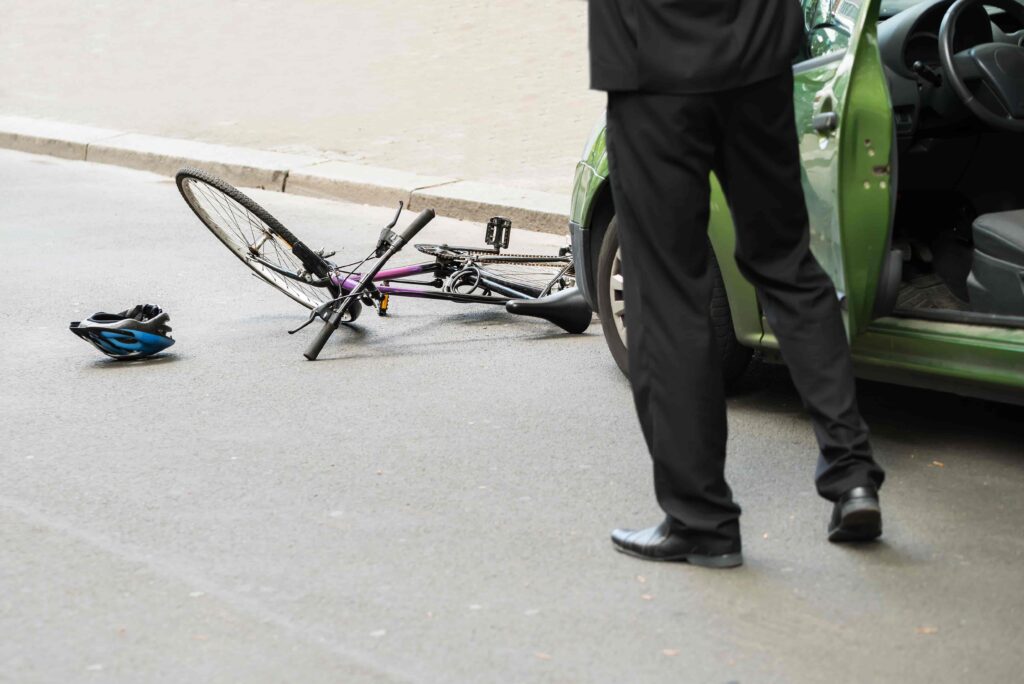
Pedestrians and cyclists have no physical buffer between themselves and a vehicle. The severity of injuries in these collisions reflects that reality. A car traveling at even moderate speed transfers enormous force to a person on foot or a bicycle, and the injuries that result often require extensive medical treatment and produce lasting physical limitations.
Texas roadways, including high-traffic areas like Houston's Westheimer corridor, the Medical Center district, and pedestrian-heavy zones in Midtown and Montrose, generate a significant number of pedestrian and bicycle accident claims each year. The injuries in these cases frequently place victims out of work for extended periods and require months of rehabilitation.
Common Injuries in Texas Pedestrian and Bicycle Accident Cases
The physical toll of a failure to yield collision on a pedestrian or cyclist tends to be severe. The following injury types appear most frequently in these cases across Texas:
- Traumatic brain injuries ranging from concussion to severe cognitive impairment, particularly in collisions where the victim's head strikes the pavement or vehicle
- Fractured pelvis, femur, tibia, or other lower extremity bones when the vehicle's impact sweeps the legs or causes the victim to fall at speed
- Spinal cord injuries resulting in partial or complete loss of motor function below the point of injury
- Road rash and soft tissue injuries requiring skin grafting or reconstructive procedures in high-speed bicycle accident cases
- Internal organ damage from blunt force trauma, which may not become apparent until hours after the collision
The severity of these injuries directly affects the damages calculation in a civil claim, including the projected cost of future medical care, the impact on earning capacity, and the non-economic losses like pain and loss of enjoyment of life that accompany permanent physical harm.
How NMW Law Handles Failure to Yield Injury Claims for Pedestrians and Cyclists in Texas
Pedestrian and bicycle accident cases require a focused investigation into how the collision happened, what traffic laws applied at that specific location, and whether the driver received a citation. NMW Law handles these claims throughout Houston, El Paso, and across Texas, from crosswalk collisions near downtown Houston's theater district to bicycle accidents along the urban trails and roadways that cyclists use throughout Harris and El Paso counties.
The firm builds each case around the full evidentiary record, pursuing every source of documentation from law enforcement reports to intersection camera footage before that material becomes unavailable.
What NMW Law Does to Advance Pedestrian and Bicycle Accident Claims in Texas
These cases move quickly in terms of evidence availability, and NMW Law responds accordingly. The firm's approach to right-of-way violation injury claims includes the following steps:
- Obtaining the police report and any traffic citations issued to the driver, which establish the official record of what laws were violated and how the collision was characterized at the scene
- Requesting intersection camera footage, dashcam recordings, and any nearby business surveillance video before those recordings are overwritten or deleted
- Gathering witness contact information and statements to corroborate the sequence of events leading to the collision
- Reviewing the specific traffic control devices, crosswalk markings, and posted signage at the location to document what rules were in place when the accident occurred
- Working with accident reconstruction professionals when the collision dynamics or the driver's account are disputed
Pedestrian and bicycle injury cases often come down to the specificity of the evidence. A well-documented traffic citation, combined with camera footage showing the moment of impact, may tell a story that is difficult for a defense team to challenge.
FAQs for Failure to Yield Pedestrian Accidents in Texas
What does failure to yield mean in a Texas pedestrian or bicycle accident case?
Failure to yield refers to a driver's violation of Texas traffic laws that require them to give the right of way to pedestrians in crosswalks or cyclists lawfully using the roadway. When a driver fails to yield and strikes a pedestrian or cyclist, that statutory violation may form the basis of a civil negligence claim. Texas law treats the violation as evidence that the driver did not act with the care the law required under the circumstances.
Does a traffic ticket issued to the driver help my Texas injury claim?
A traffic citation carries evidentiary weight in a civil case because it documents that law enforcement identified a statutory violation. When the cited violation is the same conduct that caused the collision, it may support a negligence per se argument in the civil lawsuit. However, a dismissed or contested citation does not eliminate civil liability, since the civil standard of proof is lower than the standard applied in traffic court.
What is negligence per se and how does it apply to a Texas crosswalk accident?
Negligence per se is a legal doctrine that uses a statutory violation as direct evidence of negligent conduct when that violation caused the type of harm the statute was designed to prevent. In a crosswalk accident where a driver violated Texas Transportation Code Section 552.003 by failing to yield to a pedestrian, that violation may satisfy the negligence element of a civil claim without separately proving the driver failed to exercise reasonable care.
What rights do cyclists have on Texas roadways?
Under Texas Transportation Code Section 551.101, cyclists operating on a public roadway have the same rights and duties as motor vehicle operators. Drivers must yield to cyclists when traffic laws require it, pass at a safe distance, and exercise the same level of care they owe to any other vehicle. A driver who strikes a cyclist by failing to observe those duties may face civil liability for the resulting injuries.
How does comparative fault affect a Texas pedestrian or bicycle accident claim?
Texas applies a modified comparative fault rule, which reduces the injured party's compensation by their percentage of fault. A pedestrian who crossed against a signal or a cyclist who was riding against traffic may be assigned a portion of the fault for the accident. As long as their share does not exceed 50 percent, they may still recover damages, though the total amount is reduced proportionally. A thorough investigation into the driver's conduct often limits the fault assigned to the pedestrian or cyclist.
How long do I have to file a pedestrian or bicycle accident injury claim in Texas?
Most personal injury claims in Texas must be filed within two years of the date of the accident under the general statute of limitations. The same deadline applies to failure to yield pedestrian and bicycle accident claims. Evidence like intersection camera footage and eyewitness availability decays quickly, which is why contacting an attorney soon after an accident helps protect both the legal claim and the evidence that supports it.
Take Action After a Failure to Yield Pedestrian or Bicycle Accident in Texas

A driver who ran a red light at a crosswalk or turned across a bike lane without looking made a decision that Texas traffic law specifically prohibits. The connection between that violation and the harm it caused is exactly what civil liability is designed to address, and the law provides a clear path for injured pedestrians and cyclists to pursue it. That path depends on evidence gathered quickly and a legal strategy built around the full picture of what happened.
NMW Law handles pedestrian and bicycle accident claims throughout Houston, El Paso, and across Texas, advancing cases from early evidence preservation through final resolution with the preparation and consistency these injuries require. If you were hurt by a driver who failed to yield, reach out today for a free consultation.
Get a Free Consultation