Texas law does not treat bicycles as second-class road users. The driver duty to cyclists in El Paso, Texas carries real legal weight. Drivers must respect specific safety rules, including the state’s Three-Foot Passing Rule. When a driver ignores those duties and a crash follows, the injured cyclist has the right to pursue compensation under Texas personal injury law.
If you were hurt while riding in areas like Downtown El Paso, near UTEP, or along North Loop Drive, you deserve clear answers about what the law requires and what options you have moving forward. An experienced bicycle accident attorney in El Paso can explain how driver duty of care works, how violations shape liability, and how you can protect your rights after a collision.
Get a Free ConsultationKey Takeaways: Driver Duty of Care Toward Cyclists in El Paso
- Texas law requires drivers to maintain at least three feet of clearance when passing cyclists.
- A driver's failure to follow traffic laws can establish negligence in a personal injury claim.
- Cyclists injured by negligent drivers may be entitled to compensation for medical bills, lost wages, and pain and suffering.
- Comparative fault rules in Texas can affect how much compensation an injured cyclist recovers.
- An experienced El Paso personal injury attorney can investigate your crash, build your case, and negotiate with insurance companies on your behalf.
What Is Duty of Care and Why Does It Matter for Cyclists?
Texas law requires drivers to act as a reasonably careful person would under similar circumstances. A reasonably careful driver obeys traffic signals, checks blind spots, and adjusts speed based on road conditions.
For cyclists, that duty includes:
- Maintaining safe passing distance
- Yielding when required
- Watching for riders in bike lanes and at intersections
- Avoiding distractions that reduce attention to the road
When a driver fails to act with reasonable care and injures someone, the law may hold that driver financially responsible.
Why Cyclists Are Considered Vulnerable Road Users
Cyclists lack the steel frame, airbags, and seat belts that protect drivers. A collision that dents a bumper can break bones or cause head trauma for a rider.
El Paso’s desert winds, uneven pavement, and heavy traffic near I-10 exits increase risk. Drivers must account for these realities. A safe driver recognizes that a cyclist’s margin for error remains small and adjusts behavior accordingly.
How Duty of Care Connects to Personal Injury Claims
A personal injury claim rests on the idea that one person’s careless act harmed another. In a bicycle crash, the injured cyclist must show that the driver owed a duty of care and breached it.
Courts often look at traffic laws to decide whether a breach occurred. When a driver violates a safety statute designed to protect cyclists, that violation can strongly support the injured rider’s claim.
Texas Traffic Laws That Protect Cyclists
Texas transportation laws treat bicycles as vehicles for most purposes. That classification grants cyclists rights and imposes duties on drivers.
The Three-Foot Passing Rule (Texas Transportation Code § 545.053)
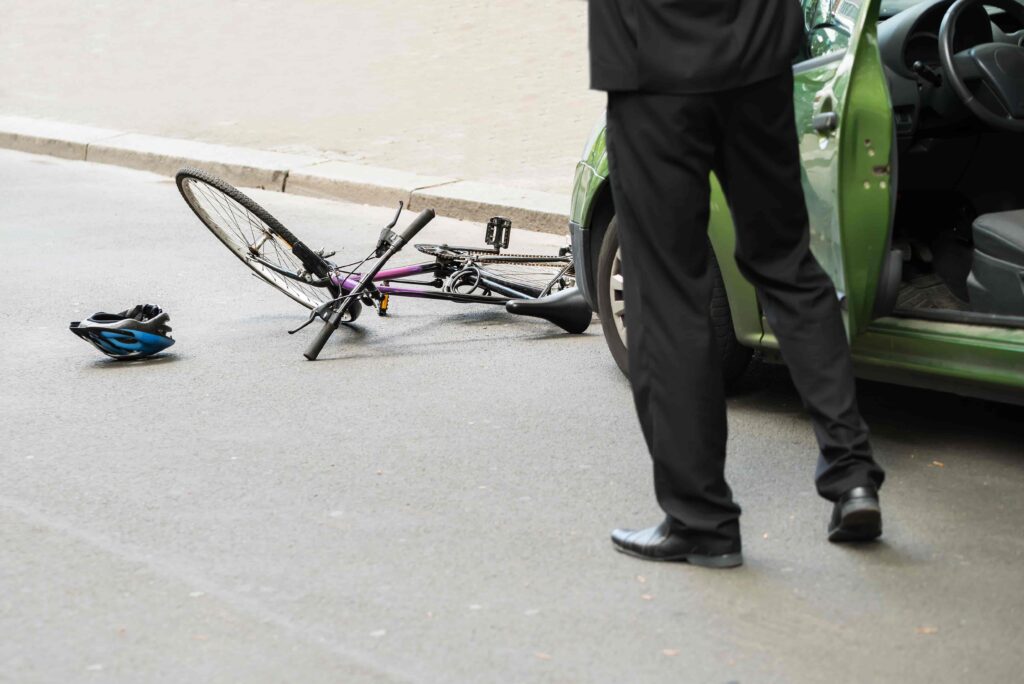
Texas Transportation Code Section 545.053 requires a motor vehicle operator to pass a bicycle at a safe distance. For most passenger vehicles, that distance equals at least three feet.
Commercial vehicles must allow at least six feet. The rule applies when overtaking a cyclist traveling in the same direction.
A driver who cannot provide that clearance must slow down and wait until it becomes safe to pass.
Yielding, Right-of-Way, and Lane-Sharing Rules
Drivers must yield to cyclists when traffic laws require it. For example, a driver turning right at an intersection must check for cyclists traveling straight in a bike lane.
Cyclists may use a full lane when necessary for safety, such as when avoiding debris or preparing for a left turn. Drivers cannot force cyclists off the road or crowd them to pass.
How Statutory Violations Help Establish Negligence Per Se
Negligence per se means negligence as a matter of law. When someone violates a safety statute and that violation causes injury to a person the statute aims to protect, courts may treat the act as automatic evidence of negligence.
For example:
- A driver passes within two feet and clips a cyclist’s handlebars.
- The Three-Foot Rule exists to protect cyclists from unsafe passing.
- The cyclist suffers injuries as a result.
That violation can support a negligence per se argument in court.
Are Drivers Required to Give Cyclists Space in Texas?
Drivers often ask whether giving cyclists space remains optional or mandatory. Texas law makes the answer clear.
What the Three-Foot Rule Requires of Drivers
The Three-Foot Rule requires drivers to measure distance in real time. Three feet equals about the width of a typical car door.
When passing on streets like Montana Avenue or Yarbrough Drive, a driver must ensure at least that much space between the vehicle and the bicycle. If traffic or lane width prevents safe clearance, the driver must slow down and wait.
When and How the Three-Foot Rule Applies in Real Traffic Situations
The rule applies whenever a motor vehicle overtakes a bicycle traveling in the same direction. It does not apply only on highways. City streets, neighborhood roads, and school zones fall under the statute.
Sometimes, drivers attempt to squeeze past cyclists in narrow lanes near Scenic Drive or through construction zones. That decision increases the risk of contact and may violate the statute.
How Violations of the Three-Foot Rule Shape Liability Arguments
Insurance companies often dispute fault in bicycle crashes. A documented violation of the Three-Foot Rule can shift the discussion.
Police reports, witness statements, and scene measurements may show that a driver passed too closely. That evidence strengthens the injured cyclist’s position during settlement talks or trial.
What Are the Most Common Causes of Driver-Cyclist Crashes in El Paso?
El Paso’s mix of urban streets and high-speed corridors creates several recurring crash patterns.
Distracted and Inattentive Driving
Texting, adjusting navigation, or eating behind the wheel reduces reaction time. A distracted driver may drift into a bike lane on Alameda Avenue or fail to notice a cyclist stopped at a red light.
Even a brief lapse in attention can lead to serious harm for a rider.
Failure to Yield at Intersections
Intersections near Sunland Park Drive or Loop 375 often see heavy turning traffic. Drivers sometimes focus on oncoming cars and overlook cyclists traveling straight.
Left-turn crashes frequently occur when a driver misjudges a cyclist’s speed or fails to look carefully before turning.
Dooring, Unsafe Passing, and Speeding Near Bike Lanes
Dooring happens when a parked driver opens a car door into a cyclist’s path. This type of crash often occurs in busy areas near Downtown El Paso.
Speeding also plays a role. Higher speeds reduce stopping distance and increase impact force, which raises the risk of serious injuries.
How Is Negligence Proven in a Cyclist Injury Case?
A successful claim requires proof, not just suspicion.
The Four Elements of Negligence Under Texas Law
An injured cyclist needs a lawyer to prove four elements:

- Duty: The driver owed a legal duty of care.
- Breach: The driver failed to meet that duty.
- Causation: The breach directly caused the crash.
- Damages: The cyclist suffered actual harm, such as medical expenses or lost income.
Each element must connect clearly to the evidence.
Evidence Used to Establish a Driver's Breach of Duty
Strong cases rely on documentation. Helpful evidence may include photographs of skid marks, damage to the bicycle, and vehicle positioning.
Medical records link injuries to the crash. Testimony from witnesses can confirm unsafe passing or failure to yield.
The Role of Police Reports, Traffic Cameras, and Expert Witnesses
El Paso Police Department reports often note whether a citation was issued. Traffic cameras near major intersections may capture footage of the incident.
In some cases, accident reconstruction professionals analyze speed, distance, and impact angles. Their technical opinions can clarify how the collision occurred.
After a crash, many cyclists seek treatment at facilities such as University Medical Center of El Paso or The Hospitals of Providence Memorial Campus. Medical documentation from these providers helps demonstrate the extent of injuries.
Texas Modified Comparative Fault and What It Means for Injured Cyclists
Texas follows a modified comparative fault rule, sometimes called the 51 percent rule.
How Texas's 51% Rule Works
Under this rule, you cannot recover damages if you bear more than 50 percent of the blame for the crash.
If you hold 20 percent of the fault and the driver holds 80 percent, a court reduces your compensation by your percentage of fault.
Can You Still Recover Damages If You Were Partly at Fault?
Yes, as long as your fault does not exceed 50 percent. For example, a cyclist who failed to use a hand signal but was struck by a speeding driver may still recover damages, reduced by the assigned percentage.
Insurance companies often attempt to shift blame onto cyclists. They may argue that the rider veered unexpectedly or failed to wear visible clothing.
How Insurance Companies Use Comparative Fault to Reduce Payouts
Adjusters frequently highlight small mistakes to justify lower settlement offers. A skilled and knowledgeable attorney reviews the facts carefully and challenges unsupported blame.
Clear evidence of a driver’s statutory violation can counter these tactics.
What Compensation Can an Injured Cyclist Recover?
A serious bicycle crash can lead to hospital stays, surgeries, and weeks away from work.
Economic Damages: Medical Bills, Lost Income, and Property Damage
Economic damages cover measurable financial losses. These may include emergency room bills, physical therapy costs, and lost wages.
Damage to your bicycle and gear also falls into this category.
Non-Economic Damages: Pain, Suffering, and Loss of Enjoyment of Life
Non-economic damages address the human impact of injuries. Chronic pain, limited mobility, and reduced ability to participate in hobbies all factor into this category.
Courts recognize that injuries affect more than bank accounts. They affect daily routines and relationships.
Punitive Damages in Cases Involving Gross Negligence
Gross negligence involves extreme carelessness, such as drunk driving or reckless speeding. Courts may award punitive damages to punish and deter such conduct.
These damages do not apply in every case, but they may arise when conduct goes far beyond ordinary negligence.
How Our Firm Can Help
NMW Law serves injured cyclists throughout El Paso. We bring years of experience handling personal injury claims in Texas courts. Our team stays focused on client advocacy and clear communication.
Investigating Your Crash and Preserving Critical Evidence
We act quickly to gather police reports, witness statements, and available camera footage. Prompt action helps preserve evidence that might otherwise disappear.
We also coordinate with medical providers to document the full scope of your injuries.
Identifying All Liable Parties and Insurance Policies
Some crashes involve more than one responsible party. A commercial vehicle operator, employer, or third-party contractor may share liability.
We review insurance policies carefully to identify all potential sources of recovery.
Negotiating with Insurance Companies and Taking Your Case to Trial if Necessary
Insurance carriers often aim to minimize payouts. We prepare each case as though it may go to trial. That preparation strengthens our position during settlement discussions. If a fair agreement cannot be reached, we stand ready to present your case before a jury.
We handle cases on a contingency fee basis. You pay no upfront fees, and we collect attorney’s fees only if we secure compensation for you.
Frequently Asked Questions About El Paso Bicycle Accident Claims
How long do I have to file a cyclist injury lawsuit in Texas?
Texas law generally allows two years from the date of the crash to file a personal injury lawsuit. Missing that deadline can bar your claim, so prompt action matters.
What if the driver claims I was riding illegally when the crash happened?
A driver’s claim does not automatically defeat your case. Evidence such as traffic footage, witness statements, and accident reconstruction can clarify what actually occurred.
Can I file a claim if I wasn't wearing a helmet when I was hit?
Yes. Texas law does not require helmets for most adult cyclists. However, the defense may argue that a helmet could have reduced injuries, which may affect damage calculations.
What should I do immediately after being hit by a car while cycling in El Paso?
Seek medical attention right away, even if injuries seem minor. Report the crash to law enforcement, gather contact information from witnesses, and avoid discussing fault with insurance adjusters before speaking with an attorney.
Can I sue the city of El Paso if a dangerous road condition contributed to my crash?
You may have a claim against a government entity if poor road design or maintenance played a role. These cases involve shorter notice deadlines and specific procedures, so quick legal guidance helps protect your rights.
Contact Our Bicycle Accident Attorneys in El Paso Now
Driver negligence can leave you dealing with medical appointments, lost income, and uncertainty about what comes next. Legal representation helps level the playing field when insurance companies begin their investigations.
NMW Law brings experience, a focused approach, and a commitment to clear answers. We take time to listen to your story, review the evidence, and explain your options in plain language. Our team understands how Texas traffic statutes, including the Three-Foot Rule, shape liability in bicycle crash cases.
If a driver failed to respect your space on the road, you deserve accountability. Contact NMW Law for a free consultation. We will review your situation, outline realistic expectations, and help you decide on the next steps with confidence.
Get a Free Consultation