When cargo falls from a commercial truck on a Texas highway, the driver whose vehicle is in the path of that debris has no warning and no reasonable opportunity to avoid it. What most people do not know is that the party that loaded that truck may carry more legal responsibility for what happened than the driver who was behind the wheel.
The loading manifests, bills of lading, and warehouse records that prove a loader's liability disappear on a timeline that has nothing to do with the two-year statute of limitations. That evidentiary clock starts the moment the crash occurs.
Key Takeaways:
- The party that loaded the truck, not just the driver, can carry legal responsibility when cargo falls and causes a crash.
- Federal cargo securement rules under 49 CFR Part 393 set specific, measurable tie-down standards, and a violation can support a negligence argument.
- Loaders, shippers, and freight brokers can each face direct liability separate from the motor carrier, which expands the pool of recovery.
- Loading manifests and bills of lading are often destroyed on carrier retention schedules far shorter than the two-year filing deadline, so preserving that evidence early is critical.
- A claim involving a government-owned truck requires a formal notice of claim on a much shorter deadline than the standard two-year limit.
What Federal Cargo Securement Rules Apply to Commercial Trucks in Texas?
Every commercial vehicle carrying cargo on a Texas highway is subject to federal cargo securement standards, regardless of whether the trip began in Texas or crossed state lines. Those standards are not general guidelines. They are specific, measurable requirements that produce a direct evidentiary foundation when violated.
What Does FMCSA Cargo Securement Law Actually Require?
49 CFR Part 393 Subpart I establishes the federal cargo securement standards applicable to all commercial motor vehicles in interstate commerce. The rule specifies minimum working load limits for tie-down equipment, the required number of tie-downs based on cargo weight and length, and specific securement methods for different cargo categories.
The rule covers flatbed freight, logs, metal coils, paper rolls, intermodal containers, vehicles, and heavy equipment separately, with each category carrying its own securement method requirements because the physics of load movement differ by cargo type. Tanker trucks carrying hazardous materials fall under a separate federal regulatory scheme entirely, governed by PHMSA rather than standard FMCSA cargo securement rules.
A violation of one of these specific requirements can support a negligence per se argument in a Texas civil case when the injured person is within the class the rule protects, and the harm is the type the rule was designed to prevent. Where it applies, the regulation itself supplies the standard of care rather than leaving a jury to define it.
How Do Securement Violations Differ From Weight Violations in Texas Cargo Cases?
Securement violations and weight violations produce different defendant structures, which is why the distinction matters practically rather than just technically.
A securement violation addresses how the cargo was tied down. That failure traces to the loading crew, the warehouse, or the carrier's pre-trip inspection process.
A weight violation addresses how much cargo was loaded. That failure traces to the shipper's documentation and the carrier's decision to accept an overweight load.
Both violations may exist simultaneously in a single cargo crash. When they do, the defendant structure expands to include parties responsible for the loading process and parties responsible for the cargo weight documentation independently. Texas law allows claims against all of them simultaneously.
Who Is Liable When Cargo Falls From a Truck on a Texas Highway?
Cargo crash liability in Texas extends to every party whose conduct contributed to the load leaving the vehicle. The driver is the most visible party. The loader, the shipper, and the freight broker are frequently the most consequential defendants from a financial recovery standpoint.
When Does the Shipper Become a Direct Defendant in a Cargo Crash Case?
A shipper becomes a direct defendant when its packaging decisions, weight documentation, or loading instructions contributed to the securement failure. Shippers bear legal responsibility for accurate cargo classification, proper packaging selection, and the accuracy of weight and dimension information provided to the carrier.
A shipper that provided inaccurate weight documentation, causing the carrier to underestimate the load's tie-down requirements, faces direct negligence liability. That claim runs independently of whatever the driver did or failed to do during the pre-trip inspection.
Both parties can carry simultaneous and independent liability for the same cargo failure. Texas comparative fault rules allow fault to be allocated across every responsible party in a single proceeding.
When Is the Loading Contractor or Warehouse Crew Responsible for a Spilled Load Crash?
When cargo was loaded by a third-party warehouse crew or loading contractor rather than the carrier's own employees, that contractor becomes a direct defendant whose liability runs independently of the motor carrier.
The loading contractor's obligation is to secure the cargo in compliance with the applicable FMCSA standards for that cargo type. Failure to use the correct number of tie-downs, failure to use tie-down equipment with adequate working load limits, or failure to follow the shipper's loading instructions all create direct contractor liability.
Identifying the loading contractor requires the bill of lading and the carrier's own load assignment records. Those documents establish who physically loaded the vehicle and under whose supervision the securement occurred.
How Does Freight Broker Liability Enter a Spilled Load Case in Texas?
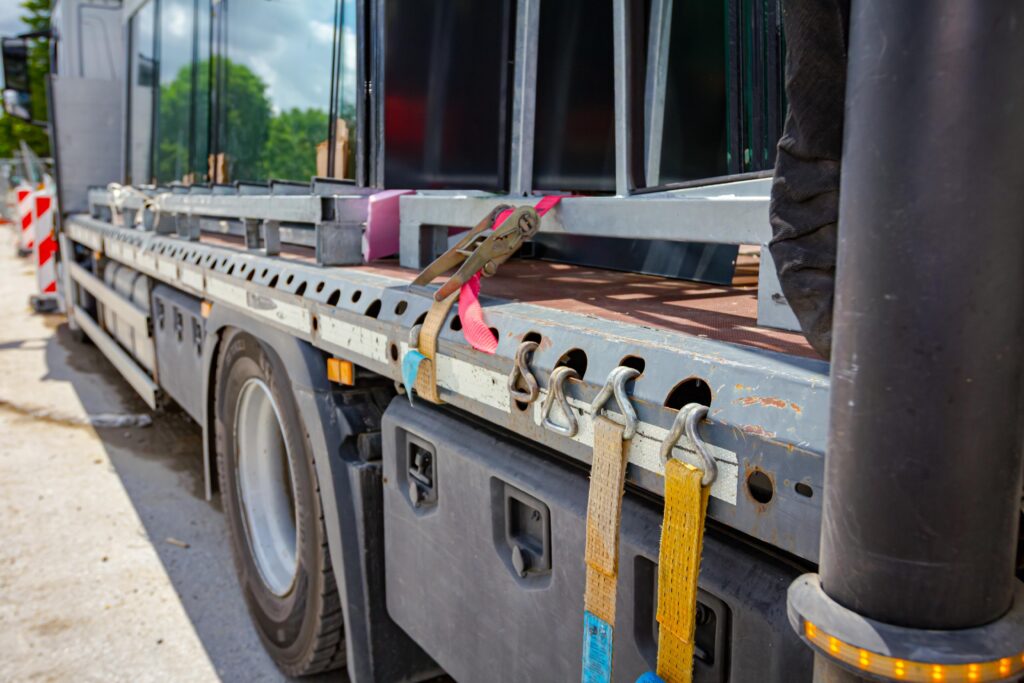
Freight brokers arrange cargo transport between shippers and carriers. Their liability exposure in cargo crash cases is an actively developing area of federal and Texas law.
A broker that assigned a load to a carrier with a documented history of cargo securement violations faces direct negligence liability when that carrier's load subsequently spills. The broker's carrier selection decision is the actionable conduct.
Federal courts have increasingly recognized that brokers cannot shield themselves from liability by pointing to their role as mere intermediaries when their selection decisions create foreseeable crash risk. FMCSA broker registration requirements establish the regulatory framework under which brokers operate, including obligations to verify carrier safety fitness before tendering cargo.
How Texas Freight Corridors Create Specific Cargo Spill Crash Conditions
Texas carries more commercial freight volume than any other state. Two specific corridors create cargo crash conditions that distinguish Texas from other markets in ways that directly affect how these cases are investigated and litigated.
How Does the I-35 Laredo Corridor Create Elevated Cargo Crash Exposure?
The I-35 corridor between Laredo and the Dallas-Fort Worth metroplex carries the highest concentration of cross-border commercial freight in the United States. Cargo originating in Mexico moves through Laredo and onto I-35 under documentation and loading practices that may not comply with FMCSA standards applicable to domestic carriers.
Cross-border cargo movements require specific documentation under both US and Mexican regulations. When that documentation is incomplete or inaccurate, establishing the chain of custody for the cargo requires an investigation that extends across international logistics records.
TxDOT crash data consistently reflects that the I-35 corridor produces among the highest commercial vehicle crash volumes of any freight route in Texas. Cargo securement violations are a documented contributor to that crash concentration.
Why Does the I-10 West Texas Corridor Amplify the Consequences of Cargo Spills?
The I-10 corridor between San Antonio and El Paso spans approximately 550 miles through some of the most sparsely populated terrain in the continental United States. A cargo spill in that corridor creates a debris field affecting traffic across a stretch of highway where emergency response resources are hours away from the spill point.
That geography amplifies the consequences of every security failure that reaches the road in that corridor. Debris that might be cleared within minutes in an urban environment remains on the roadway for extended periods in West Texas.
Vehicles traveling at interstate speeds through that corridor have no reasonable ability to avoid debris they encounter without warning. The chain of vehicles affected by a single spill event can extend for miles before the debris field is fully contained.
What to Consider After a Spilled Load Truck Crash in Texas
These considerations address the legal dimension of the cargo crash aftermath rather than the scene itself. The decisions made in the first days after a spilled load crash shape the evidentiary record that follows.
Many claimants find it helpful to consider the following after a cargo spill crash:
- Photograph the debris field and its extent before any cleanup occurs. The size and distribution of the debris field are direct physical evidence of how the cargo was secured and how it left the vehicle.
- Note the cargo type and any markings on the debris if it is safe to approach. Cargo classification affects which FMCSA securement standard applies and, therefore, which securement method is required.
- Identify the carrier name, DOT number, and any shipper markings visible on the truck or cargo. Those identifiers trace the loading chain.
- Avoid characterizing the crash as a weather event or road hazard in any statement to an insurance adjuster. Cargo spills on clear-weather highways are almost always securement failures, not weather events.
- Contact a spilled load truck crash liability attorney before the loading manifests and bills of lading reach the end of the carrier's retention period.
Ask NMW: Cargo Securement and Spilled Load Questions From Texas Drivers
The cargo that hit my car came from a truck I never actually made contact with. Can I still file a claim?
Yes. When ejected cargo struck your vehicle without any direct contact between your car and the truck, the same carrier, loader, and shipper liability applies as in a direct collision case. The liability chain follows the cargo, not the vehicle-to-vehicle contact. The cargo's origin, securement record, and loading documentation establish who is responsible for the debris that caused your crash.
How long do I have to file a spilled load truck accident claim in Texas?
The statute of limitations for personal injury claims in Texas is two years from the date of the accident under Tex. Civ. Prac. & Rem. Code § 16.003. Loading manifests and bills of lading face carrier retention timelines as short as 90 days. The sooner the investigation begins, the more complete the loading chain record will be.
The truck that lost its load was a government or municipal vehicle. Can I still file a claim?
Yes, but government vehicle cargo spill claims require compliance with the Texas Tort Claims Act under Tex. Civ. Prac. & Rem. Code § 101.101. A formal notice of claim must be filed within the deadline the Act sets, which is six months under state law, though many Texas cities impose a shorter deadline by charter, some as short as 90 days.
Missing the applicable deadline can eliminate the government liability claim permanently, even when the personal injury claim itself remains timely under the standard two-year limitation period.
What Evidence Establishes Liability in an Improperly Loaded Truck Accident in Texas?
The evidentiary foundation of a cargo securement case requires records that do not exist in standard vehicle accident investigations. Those records trace the cargo from the loading facility to the highway and establish who was responsible for every decision in that chain.
Which Documents Prove a Cargo Securement Violation in a Texas Crash Case?
The records that carry the most weight in a spilled load truck crash liability case include:
- Bills of lading establishing what cargo was loaded, in what quantity, and under whose shipping instructions
- Loading manifests documenting the securement method used and the equipment selected.
- Weigh station records reflecting the vehicle's weight at the last inspection point before the crash.
- Pre-trip inspection reports are completed before departure.
- Cargo securement equipment inspection records showing the condition of straps, chains, and binders at the time of loading
- Carrier safety records from the FMCSA Safety Measurement System reflecting prior cargo securement violations
- Shipper packaging and classification documentation establishing whether the cargo type was accurately represented.
Each document type requires a specific preservation demand addressed to a specific custodian. Shipper records, carrier records, and warehouse records all require separate demands issued simultaneously.
Related Content
Cargo Securement Truck Accident Questions Answered by Our Texas Attorneys
Does the truck driver bear any personal liability for a spilled load crash?
Yes, when the driver's pre-trip inspection failed to identify an obvious securement deficiency. FMCSA regulations require drivers to inspect cargo securement before departure and at intervals during the trip. A driver who failed to identify and correct a visible securement problem carries personal liability alongside the loader and shipper. That liability runs concurrently with vicarious carrier liability for the driver's conduct.
Can I file a cargo crash claim if I swerved to avoid the debris and hit a barrier or another vehicle?
Yes. When a driver takes evasive action to avoid spilled cargo and sustains injury or property damage as a result of that evasion, the carrier and loader bear liability for every foreseeable consequence of the spill, including secondary collisions caused by evasive maneuvers. The chain of causation runs from the securement failure through the debris event to every crash that resulted from it.
Does NMW Law Firm handle cargo securement truck accident cases on a contingency fee basis?
Yes. For clients dealing with medical bills, lost income, and the immediate financial pressure that follows a serious crash, the contingency fee structure means legal representation does not add to that burden. We collect no fees unless we recover compensation, and no charges apply if the case does not resolve in your favor, regardless of how many defendants the loading chain investigation identifies.
The Loading Record Tells a Different Story Than the Crash Report

A cargo spill crash report tells one story. The loading manifests, warehouse footage, and shipper documentation tell another story. Those two versions of events rarely point to the same party, and the second version disappears first.
The legal case that reaches every responsible party is built on both. Consultations are free, available in English and Spanish, and carry no obligation to proceed.
Call (713) 714-2563 or contact us online to get started.