If a commercial truck rear-ended you in Texas, liability often depends on whether the driver maintained a safe following distance and left enough room to stop under the conditions at the time of the crash.
The central issue is whether the truck driver acted reasonably given the vehicle’s speed, the traffic, the roadway, and the distance between the truck and the vehicle ahead.
The carrier or its insurer may argue that you stopped too quickly, changed lanes without leaving enough space, or gave the truck driver no realistic opportunity to avoid the collision.
These defenses are common in rear-end truck accidents in Texas and may arise before the police investigation is complete.
Determining what happened often requires a close look at the truck’s operation in the moments before impact, including its speed, following distance, brake use, and the driver’s attention.
Electronic truck data, maintenance records, dashcam footage, and other available evidence can help show whether the driver had enough time and distance to respond safely.
Who is liable if a commercial truck rear-ends me in Texas, and how long do I have to file a claim?
If a commercial truck rear-ended you in Texas, the case usually turns on whether the driver kept a safe following distance and had enough room to stop. Fault often falls on the truck driver or motor carrier, though Texas law also considers other conduct that contributed to the crash. Injury victims generally have two years from the date of the collision to file a personal injury lawsuit, although exceptions may alter the deadline.
Key Takeaways About Rear-End Truck Accidents in Texas
- The rear-end position of a truck at impact points toward following-distance and stopping-ability questions rather than proving fault by itself.
- An 18-wheeler needs substantially more stopping distance than a passenger vehicle at the same speed, and that gap sits at the center of most rear-end truck cases.
- Texas law requires drivers to maintain an assured clear distance, while federal commercial-driver training materials provide safety guidance on managing following distance.
- Event data from the truck, dashcam footage, and dispatch records often carry more weight than the crash report in a rear-end truck claim.
- Injury victims in Texas generally have two years from the date of the crash to bring a claim under state law.
What Does 18-Wheeler Stopping Distance Actually Look Like?
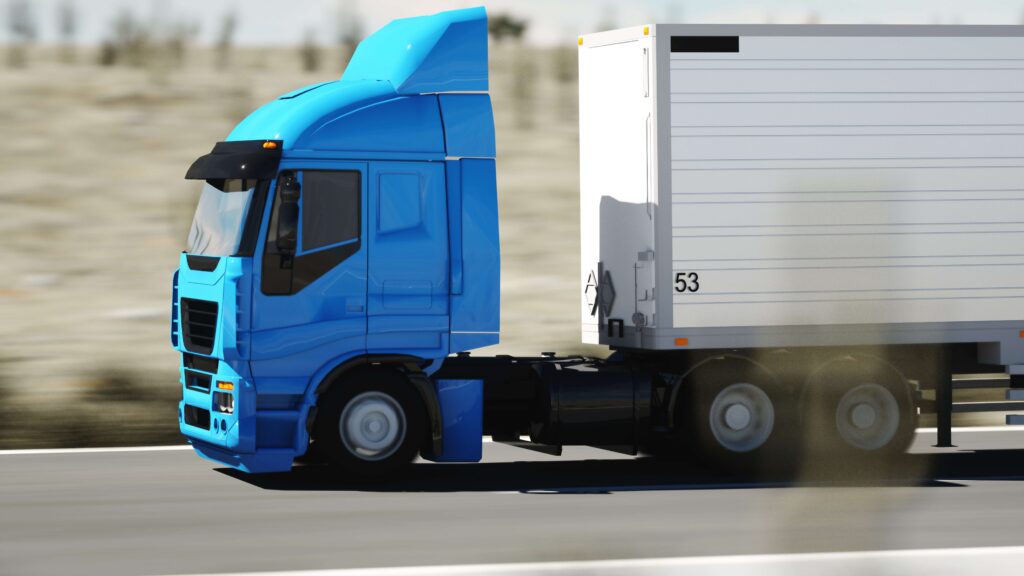
18-wheeler stopping distance grows sharply with speed, weight, road surface, and brake condition. A loaded tractor-trailer at highway speed may need well over the length of a football field to come to a complete stop under normal conditions. Rain, downhill grades, and worn brakes stretch that number further.
Air brakes introduce a delay that passenger-car drivers do not encounter. Most passenger vehicles use hydraulic brakes that respond almost immediately when the pedal is pressed.
Air-brake systems take slightly longer to build and apply braking pressure, and at highway speeds, even a brief delay can add significant stopping distance.
| Vehicle and Condition | Approximate Speed | General Stopping Consideration |
| Passenger car, dry pavement | 55 mph | Shorter stopping distance under normal conditions. |
| Loaded tractor-trailer, dry pavement | 55 mph | Substantially longer stopping distance due to weight and air brake lag. |
| Passenger car, dry pavement | 65 mph | Stopping distance grows with speed but remains manageable. |
| Loaded tractor-trailer, dry pavement | 65 mph | Stopping distance may exceed the length of a football field. |
| Any vehicle, wet pavement | Highway speed | Stopping distance may increase substantially. |
These figures are general expectations that depend on many variables. What matters for a claim is not the exact foot count. What matters is whether the driver left enough room for the conditions on the road that day.
Why Do Trucking Insurers Push the "You Stopped Short" Argument?
Trucking insurers push the "you stopped short" argument because it shifts the legal question away from the truck's following distance and onto the reader's driving.
It is a familiar move in a following distance truck crash claim, and it is one of the reasons rear-end truck cases are less one-sided than people expect.
The specific defense arguments that tend to appear in a rear-end truck accident Texas case include the following.
- The vehicle ahead stopped suddenly for no apparent reason.
- The vehicle ahead cut into the truck's lane and left no room to react.
- The vehicle ahead slowed for a light that had just turned yellow, then stopped.
- The truck driver reacted appropriately but was too close to avoid contact.
- A mechanical or roadway condition, not driver conduct, caused the crash.
None of these arguments is automatically wrong. Some of them may reflect what actually happened on the road. What they all have in common is that they push the analysis away from the truck's own conduct, and that is where a careful rear-end claim tends to bring it back.
When a Sudden Stop Is Not Really a Sudden Stop
A sudden stop, in the way carriers use the phrase, is not the same as a legally significant one. Texas roads are full of predictable reasons a vehicle ahead might slow or stop.
Brake lights come on for traffic congestion, changing signals, road debris, disabled vehicles, and pedestrians. A commercial driver is expected to anticipate those events by leaving enough space in front of the truck.
Who Is Liable in a Rear-End Truck Collision in Texas?
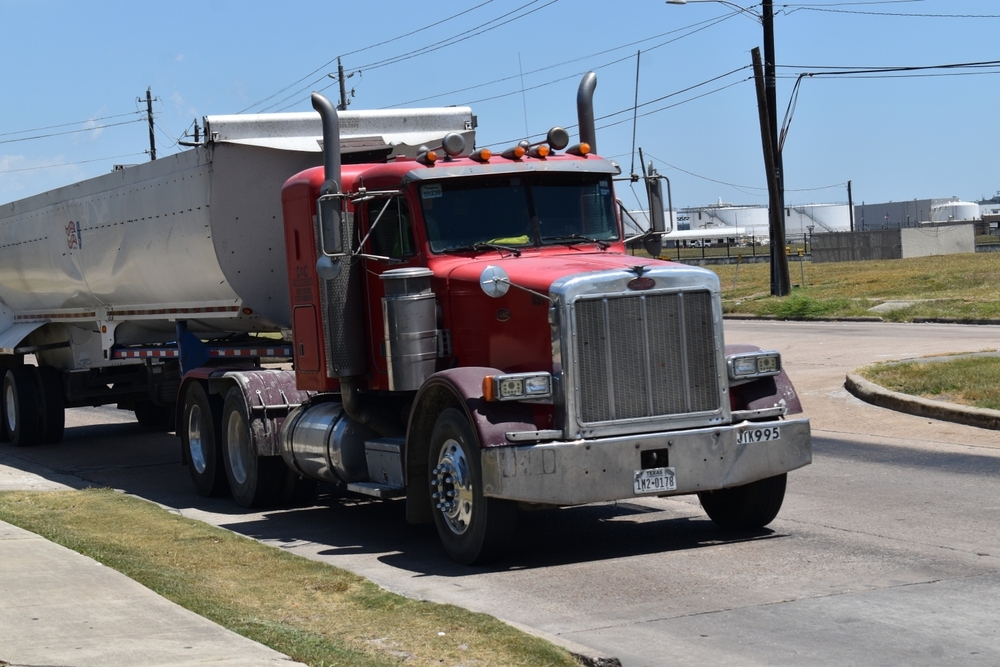
Liability in a rear-end truck collision in Texas depends on whose conduct actually caused the crash. Truck rear-end collision liability may rest with the driver, the motor carrier, or a combination, and Texas allows fault to be divided among more than one party when the evidence supports it.
Company-level liability is often the more useful angle in a rear-end truck case. Carriers hire drivers, train them, dispatch them, and maintain the equipment.
When the crash traces back to a scheduling decision that pushed a driver into a fatigued driving window, or a maintenance shortcut that left brakes underperforming, those choices belong to the carrier rather than to the driver alone.
What About the Driver's Personal Fault?
The driver's personal fault often centers on following distance, speed, and attention. A driver who was texting, eating, or watching a screen may have been engaged in distracted driving — losing the reaction window that a proper following distance is meant to preserve.
Federal rules under the Federal Motor Carrier Safety Administration address hours of service and driver conduct in ways that may inform the case.
What Rules Govern Following Distance in Texas?
Texas law and commercial-driver safety guidance both address safe following distance.
Texas Transportation Code Section 545.062 requires drivers to maintain sufficient distance based on factors such as speed, traffic, and roadway conditions, while FMCSA safety materials provide additional guidance for commercial drivers on maintaining adequate space.
The FMCSA Commercial Driver's License Manual directs commercial drivers to measure following distance in seconds rather than car lengths. The time-based approach adjusts naturally as speed rises.
A driver at 65 miles per hour needs more distance than a driver at 40 miles per hour, and the time-based rule reflects that without requiring conversion.
When a rear-end crash occurs, investigators may examine compliance with applicable traffic laws, company safety policies, and federal motor-carrier regulations. Driver training documents, safety meeting notes, and dispatch communications may all show what the carrier expected of its drivers on following distance — our Texas truck accident resource hub covers these carrier requirements in more depth.
What Does an Event Data Recorder Show in a Rear-End Truck Crash?
An event data recorder in a commercial truck may capture the vehicle's operation in the seconds before an impact, though exact contents depend on the equipment. Not every truck records the same information. What is present, and how long it stays available, varies by manufacturer, software version, and fleet configuration.
Information that a commercial event data recorder or electronic control module may contain includes the following categories.
- Vehicle speed in the seconds leading up to the collision.
- Throttle position and any change to it before impact.
- Brake application, timing, and pressure changes.
- Engine and vehicle diagnostic information tied to the moment of the crash.
- Fault or warning codes present at the time of the event.
That kind of operational data is often the difference between a rear-end case that turns on physics and one that turns on the parties' competing stories. The data does not tell the whole story, but it fills gaps that witness memory cannot.
Related Content
What if the Truck Was Empty or Only Partly Loaded?
An empty or partly loaded truck stops differently than a fully loaded one, and that difference may affect the rear-end analysis. Load weight, weight distribution, and trailer configuration all influence stopping performance and braking behavior.
An empty or lightly loaded tractor-trailer does not necessarily stop faster than a fully loaded one.
Reduced traction, stiff suspension, and the risk of wheel lock can make an empty combination vehicle difficult to stop safely, while load weight and distribution can also affect trailer stability and braking behavior.
Whether the driver adjusted following distance and speed to match the load is one of the questions a careful rear-end claim examines.
What Time Limit Applies to a Rear-End Truck Accident Claim in Texas?
A rear-end truck accident claim in Texas is generally subject to a two-year filing deadline under Section 16.003 of the Texas Civil Practice and Remedies Code. Fatal rear-end truck crashes handled as wrongful death claims are also generally subject to the same two-year period, running from the date of death.
The evidence timeline in these cases usually runs much shorter than the legal one. Some electronic truck data may be overwritten through normal system operation. Dashcam files, telematics data, and event recorder information may cycle out unless steps are taken to preserve them. Waiting through the full statutory period often means losing evidence that could have shaped the case.
FAQs for a Rear-End Truck Accident in Texas
Does a truck driver's following-distance citation help my case?
A following-distance citation does not by itself establish that the truck driver was negligent in a Texas civil case. Whether information connected with the citation is admissible depends on the circumstances and the applicable rules of evidence.
Other proof, such as witness testimony, electronic truck data, video footage, and physical evidence, may be more important in establishing how the collision occurred.
What if I was towed away and I do not know how fast the truck was going?
You may still have a strong case even if you do not know the truck's speed. Speed information often comes from the truck's own electronic control module or event data recorder rather than the injured driver's memory. Reconstruction professionals may also estimate speed from physical evidence at the scene.
What if the truck's automatic emergency braking system failed?
If an automatic emergency braking system was installed and malfunctioned, that issue may be relevant to the claim. Potential responsibility depends on the cause of the malfunction, including possible maintenance, repair, or product-related issues.
Automatic emergency braking is meant to supplement the driver, not replace safe following distance. When the system malfunctions, the analysis may extend to the manufacturer, the maintenance provider, or the carrier depending on the facts.
Does dashcam footage from a nearby car help a rear-end truck accident claim?
Yes, dashcam footage from a nearby vehicle may help a rear-end truck accident claim significantly. Independent video often clarifies following distance, brake lights, and lane positions in ways that witness testimony cannot.
Locating that footage early matters because personal dashcams often overwrite recordings within days.
What if the truck driver claims a medical emergency caused the crash?
An unforeseeable medical emergency may provide a defense to negligence in Texas if the driver became incapacitated before the collision, the incapacity caused the crash, and the event was not reasonably foreseeable.
The driver’s medical history, qualification records, and certification status may therefore become important.
Depending on the facts, separate questions may also arise about whether the carrier knew or should have known that the driver was medically unfit to operate the truck.
Get Legal Support After a Rear-End Truck Crash

A rear-end truck crash looks like the simplest kind of case until the carrier's insurer starts building the file. The stopping-distance question, the following-distance question, and the driver-conduct question are all still open until the truck's records are pulled and read against the physical evidence.
NMW Law Firm's truck accident lawyers work these cases across Texas from offices in Houston, El Paso, Plano, and San Antonio. Reach us at (713) 714-2563 when you are ready to have someone review what the truck's records may already say about your crash.