Understanding jackknife truck accident causes in Texas often begins with a familiar sequence of events.
A driver brakes too hard on a rain-slicked stretch of I-10 near Katy. A motor carrier sends a rig onto I-45 through the Galveston County corridor with worn brake pads. A fatigued driver hauling freight from the Port of Houston misjudges a curve on I-69.
In many cases, the immediate mechanical trigger is a loss of traction at the drive axle. Trailer instability, hazardous road conditions, improper loading, and sudden actions by other motorists may also contribute.
Although the physics of a jackknife crash may be relatively straightforward, determining negligence requires a closer examination.
Investigators must evaluate what the driver did, what the trucking company failed to do, and what electronic and physical evidence reveals about the moments leading up to the collision.
What are the most common causes of jackknife truck accidents in Texas, and what evidence is needed to prove negligence?
Jackknife truck accident causes in Texas most often involve braking errors, excessive speed, poor vehicle maintenance, or some combination of the three. Proving negligence requires evidence from the truck's electronic systems, the carrier's maintenance files, and the driver's service logs.
Key Takeaways About Jackknife Truck Accident Causes in Texas
- A jackknife typically occurs when a truck's drive axle wheels lose traction and the trailer swings forward, folding against the cab at the fifth-wheel coupling point.
- Braking errors, excessive speed for road conditions, and poor trailer maintenance account for a large share of preventable jackknife crashes on Texas highways.
- Proving truck driver negligence in a jackknife case often requires electronic control module data, driver logs, maintenance records, and accident reconstruction analysis, much of which the trucking company controls or has primary access to.
- Federal Motor Carrier Safety Administration (FMCSA) regulations set specific standards for braking systems, driver training, and hours of service that directly apply to jackknife crash liability.
- Texas comparative fault law under Texas Civil Practice and Remedies Code §33.001 allows injured motorists to recover compensation even if they share some responsibility, as long as their fault does not exceed 50%.
What Actually Causes a Truck to Jackknife?
A jackknife typically happens when the tractor-trailer's drive wheels lose grip with the road surface while the trailer's momentum continues pushing it forward.
The trailer swings outward around the fifth-wheel coupling, which is the pivot point connecting the cab to the trailer, until the rig folds into a shape resembling a closing pocket knife.
The Physics Behind Traction Loss
Traction loss at the drive axle is the mechanical trigger for most jackknife events. When a truck driver brakes too hard or too suddenly, the drive wheels may lock or decelerate faster than the trailer wheels.
The trailer, still carrying forward momentum, pushes against the cab and rotates around the coupling.
This rotation happens fast. Once the trailer angle exceeds roughly 15 degrees from the cab's centerline, the driver generally loses the ability to correct the skid through steering alone.
At highway speeds, the sequence from initial traction loss to full jackknife may take fewer than four seconds.
Other Contributing Factors Beyond Driver Input
While braking error accounts for a large share of jackknife incidents, other factors may also contribute.
Sudden road hazards, debris, tire blowouts, or abrupt lane changes by other vehicles may force emergency braking that leads to traction loss.
Trailer-induced instability from improperly distributed cargo or a shifted load may trigger a jackknife even without aggressive braking. Each cause points to a different potentially liable party.
Why Loaded and Unloaded Trailers Jackknife Differently
An empty or lightly loaded trailer is actually more prone to jackknifing than a heavy one. Less weight on the trailer axles means less friction between the tires and the road.
During hard braking, the lighter trailer slides more easily because the cab carries a disproportionate share of the rig's total braking force.
A heavily loaded trailer creates different risks. The added mass increases stopping distance and amplifies the force of any swing that does occur.
The resulting collision tends to be more destructive even if jackknifes happen somewhat less frequently with heavier loads.
What Driver Errors Lead to Jackknife Crashes on Texas Highways?
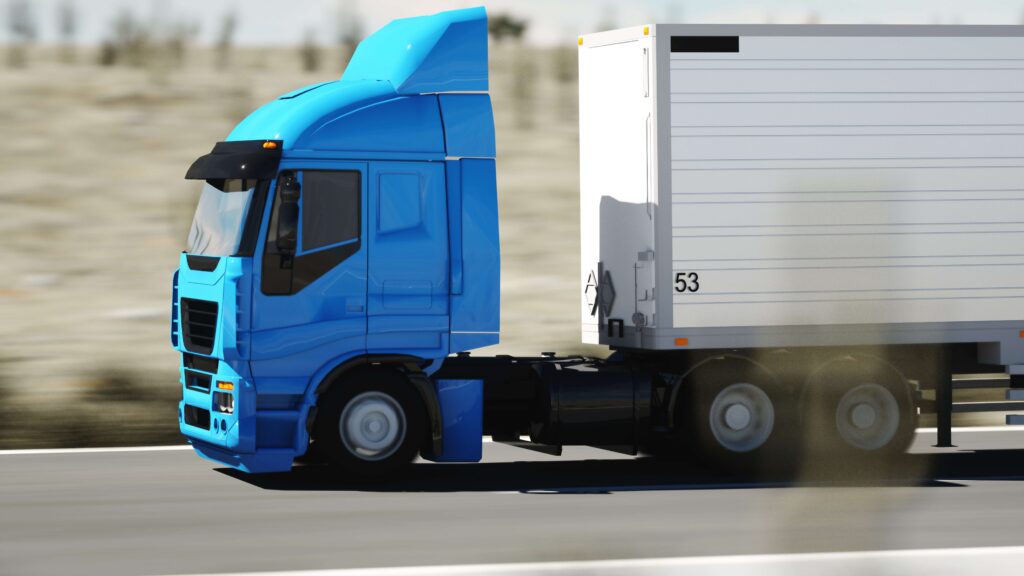
Braking error is the single most common driver-side cause of jackknife truck accidents in Texas.
When a driver applies the brakes too aggressively for road conditions, vehicle speed, or trailer load, the drive wheels lose traction and the jackknife sequence begins.
Several specific driver behaviors regularly contribute to jackknife crashes on Houston-area highways:
- Braking too hard on wet or slick pavement, a recurring factor on Houston's rain-prone corridors like I-10 through Katy and I-45 through Galveston County
- Entering curves or highway ramps at speeds too high for the trailer's center of gravity, causing the load to shift and the rear axle to break loose
- Following too closely behind slower traffic, leaving insufficient stopping distance and forcing panic braking
- Driving while fatigued beyond the hours-of-service limits set by FMCSA regulations under 49 CFR Part 395, which slows reaction time and impairs braking judgment
- Failing to downshift or use engine braking on long downgrades, overheating the service brakes until they lose effectiveness
Each of these errors involves a choice or a lapse that a reasonably careful driver would have avoided. That gap between what the driver did and what a competent driver would have done under the same conditions forms the foundation of a negligence claim.
When Is the Trucking Company Liable, Not Just the Driver?
The trucking company may bear liability for a jackknife accident when corporate decisions about maintenance, training, or scheduling contributed to the crash.
Texas law holds motor carriers accountable through respondeat superior (employer liability for employee conduct during the scope of employment) and through direct negligence by the carrier itself.
Brake System Failures and Maintenance Gaps
FMCSA regulations under 49 CFR Part 393 set minimum standards for commercial vehicle brake systems.
A carrier that sends a truck onto Texas highways with worn brake pads, out-of-adjustment brakes, or a malfunctioning anti-lock braking system (ABS) creates the conditions that make jackknifes more likely during routine stops.
Maintenance records, pre-trip and post-trip inspection logs, and brake adjustment measurements from the truck involved in the crash often reveal whether the carrier met federal standards.
Gaps in those records, or records showing repeated deferrals of brake repairs, strengthen the negligence case against the carrier.
Driver Qualification and Training Deficiencies
FMCSA requires carriers to maintain specified qualification records for covered commercial drivers, including driving-record inquiries, road-test documentation or an accepted equivalent, and applicable medical-certification information.
Separate training records may also be relevant when evaluating whether the carrier adequately trained the driver.
A carrier that hires or retains a driver without verifying proper training on braking techniques, load securement, or adverse-weather driving may face direct liability when that driver causes a jackknife crash.
The following carrier-level failures often appear in jackknife negligence claims:
- Hiring drivers without verifying prior safety records through the FMCSA's Pre-Employment Screening Program (PSP)
- Failing to train drivers on proper braking techniques for varying load weights and road conditions
- Pressuring drivers to meet delivery deadlines that require exceeding hours-of-service limits
- Skipping or falsifying mandatory vehicle inspections required under 49 CFR Part 396
A trucking company that cuts corners on hiring, training, or maintenance makes a business decision that directly increases the risk of a jackknife on a public highway.
What Evidence Proves Truck Driver Negligence in a Jackknife Case?
Proving truck driver negligence in a jackknife crash requires physical, electronic, and regulatory evidence linking the driver's conduct to the traction loss that triggered the jackknife.
Witness testimony alone rarely tells the full story because jackknifes happen too quickly for bystanders to observe the cause.
The strongest jackknife negligence cases rely on several categories of evidence, each targeting a different element of the claim.
| Evidence Type | What It Reveals | Where It Comes From |
| ECM/black box data | Speed at impact, braking force, throttle position, ABS activation | Truck's onboard electronic control module |
| Driver logs and ELD records | Hours driven, rest breaks, compliance with service limits | Electronic logging device (ELD) mandated by FMCSA |
| Maintenance records | Brake condition, tire tread depth, ABS functionality, inspection history | Carrier's maintenance files and shop records |
| Accident reconstruction | Point of traction loss, trailer swing angle, speed calculations | Retained engineering and reconstruction consultants |
| Weather and road data | Precipitation, road surface temperature, visibility at the time of the crash | National Weather Service archives and TxDOT road condition reports |
| Post-crash inspection | Brake adjustment measurements, tire condition, mechanical defects | Law enforcement and FMCSA post-crash inspection reports |
Why Spoliation Letters Matter in Jackknife Cases
The trucking company has primary access to much of this evidence. ECM data may be overwritten when the truck returns to service. Onboard camera footage cycles on short retention schedules.
Dispatch logs and maintenance files sit on company servers with no independent obligation to preserve them unless someone sends a formal demand.
A preservation letter formally notifies the carrier to retain potentially relevant evidence related to the crash.
Although the letter is not a court order and does not itself compel preservation or production, it may help establish the carrier’s preservation obligations if litigation is reasonably anticipated.
How Does Texas Comparative Fault Apply to Jackknife Truck Crashes?
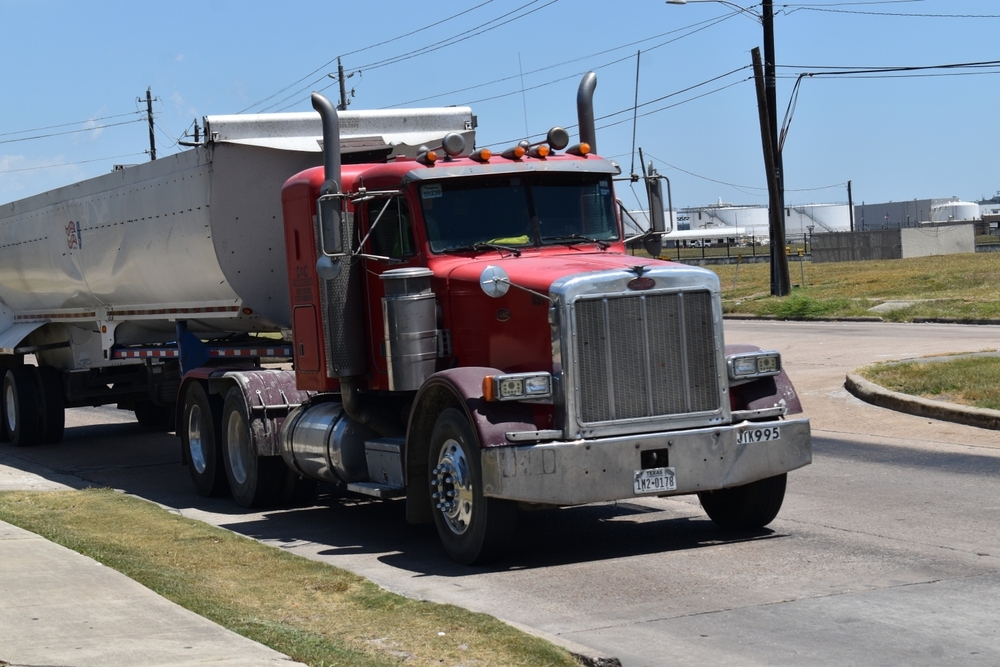
Texas comparative fault law allows a person injured in a jackknife truck accident to recover compensation even if they share some responsibility for the crash.
Under Texas Civil Practice and Remedies Code §33.001, your recovery is reduced by your percentage of fault but is not eliminated unless your share exceeds 50%.
How Carriers Use Comparative Fault Against You
Trucking company defense teams routinely argue that the injured motorist contributed to the collision by following too closely, failing to brake in time, or attempting to pass the truck during the jackknife event.
These arguments aim to shift enough fault onto you to reduce the carrier's payout or, if they push your share above 50%, to eliminate it entirely.
Accident reconstruction evidence and ECM data often counter these arguments by showing exactly how fast the truck was moving, when the driver braked, and how much time other motorists had to react.
Building that evidentiary record early separates a well-prepared jackknife claim from one that gets reduced during negotiations.
FAQs for Jackknife Truck Accident Causes in Texas
Is a truck driver automatically at fault for a jackknife crash in Texas?
No, a truck driver is not automatically at fault for a jackknife. Fault depends on the specific cause.
If a braking error, excessive speed, or fatigue triggered the traction loss, the driver may bear primary liability.
If a brake system failure, road hazard, or third-party action caused the jackknife, other parties may share or bear fault instead.
The trucking company says weather caused the jackknife. Does that get them off the hook?
Weather alone does not excuse a jackknife crash. Federal regulations under 49 CFR §392.14 require truck drivers to reduce speed and adjust driving for adverse conditions.
A driver who maintained highway speed during heavy rain and then jackknifed may still face negligence liability for failing to adapt. However, the full facts of each crash determine how fault is allocated.
The truck driver was not cited by police. Does that mean they are not liable?
No, a lack of a traffic citation does not mean the truck driver is free from civil liability. Law enforcement citations address criminal traffic violations.
Civil negligence claims operate under a different standard and rely on evidence like ECM data, maintenance records, and accident reconstruction that police reports may not capture.
How do I find out if the truck's brakes were defective before the crash?
Brake condition at the time of the crash may be documented through post-crash inspection reports by law enforcement or FMCSA inspectors, carrier maintenance logs, and pre-trip inspection records.
An attorney may seek these records through formal discovery after litigation begins and may send an early preservation letter requesting that the carrier retain them. ECM data may also reveal whether the ABS activated during the braking event.
Who pays for injuries if multiple vehicles were involved in the jackknife?
Liability in a multi-vehicle jackknife crash in Texas may fall on the truck driver, the trucking company, a maintenance contractor, or some combination.
The truck's commercial liability policy typically serves as the primary source of compensation for injured motorists. Texas comparative fault rules apply separately to each injured party's claim.
How long do I have to file a lawsuit after a jackknife truck accident in Texas?
Texas applies a two-year statute of limitations to most personal injury claims, including jackknife truck accidents, under Texas Civil Practice and Remedies Code §16.003.
The deadline runs from the date of the crash. Electronic evidence from the truck may be lost well before that deadline without a prompt spoliation letter.
Hold the Right Parties Accountable After a Texas Jackknife Truck Accident

A jackknife crash leaves a data trail. The truck's ECM likely recorded braking force and speed. The carrier's files may show whether the brakes passed inspection.
The driver's electronic logs reveal how many hours they spent behind the wheel before the tractor folded across traffic. That evidence tells the real story of what caused the crash, but only if someone secures it before the carrier's routine data cycles erase it.
If a jackknife truck accident on a Texas highway injured you or someone in your family, call NMW Law Firm at (713) 714-2563 to discuss what the evidence may reveal about driver or carrier negligence. The case review costs you nothing.